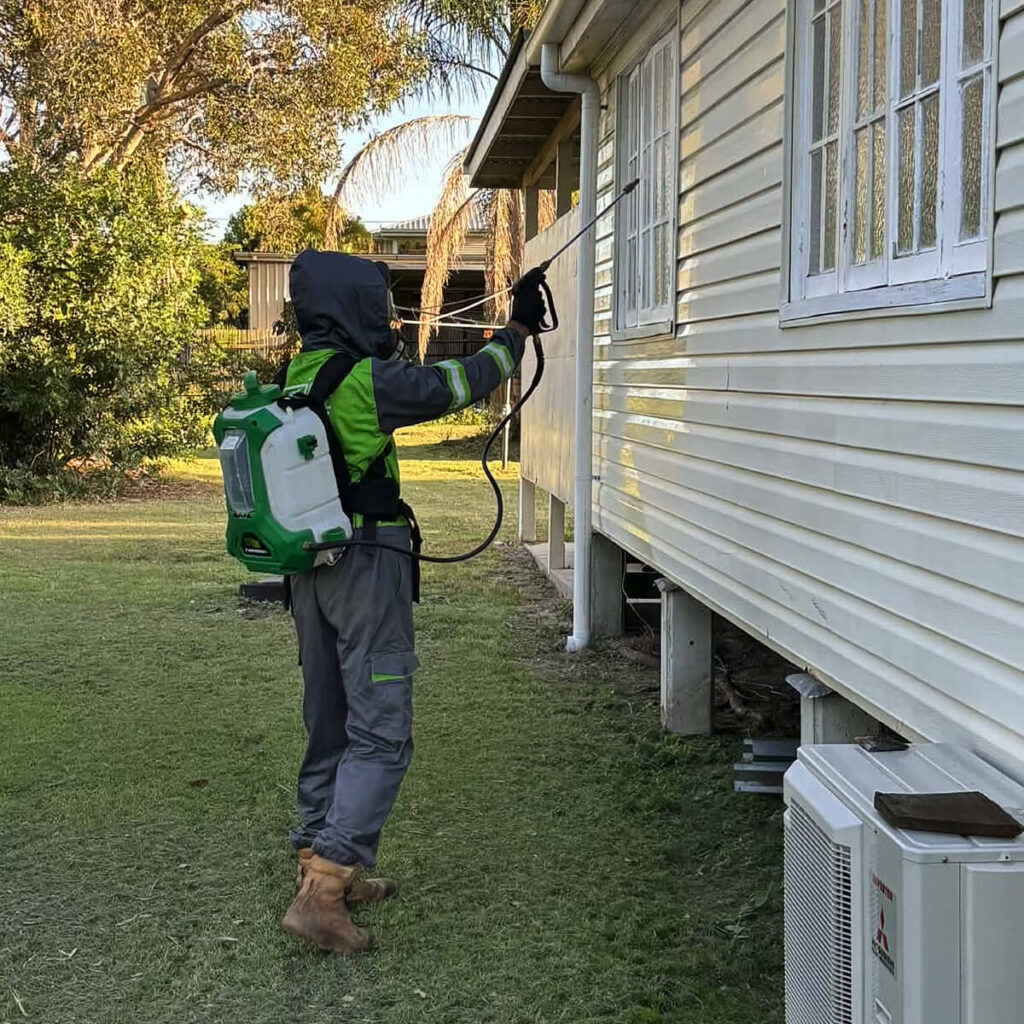
A technician in full protective gear using a backpack sprayer to apply ant treatment to the exterior walls of a home.

Your Trusted Pitt Meadows Pest Control Service

Pest control in Pitt Meadows comes with its own challenges because this is a landscape shaped by open farmland, river systems, drainage channels, and moisture-rich ground conditions. Unlike dense urban centres where pests spread mainly through shared buildings, Pitt Meadows experiences constant movement between natural outdoor habitats and residential or commercial properties. Rodents, insects, and nuisance wildlife have easy access to shelter, water, and food sources throughout the area, which creates steady pest pressure year-round.

At Topline Pest Control, we provide targeted Pitt Meadows pest control solutions built around how pests actually behave in this environment. Whether it is rats moving in from nearby fields, carpenter ants establishing colonies in damp timber, wasps nesting around sheds and rooflines, or raccoons entering attic spaces from tree-lined properties, we focus on locating the source of activity and stopping the conditions allowing pests to settle in.

Many properties in Pitt Meadows sit close to ditches, green corridors, wooded edges, and open land. These natural surroundings make the area attractive not only to insects and rodents, but also to larger wildlife searching for warmth and shelter as seasons change. Effective pest management here requires more than quick treatment — it requires long-term exclusion, habitat understanding, and practical prevention.

Professional Pitt Meadows pest removal should not simply react to visible pest activity. It should solve why the infestation started in the first place and prevent it from returning.


Pest Control Pitt Meadows – What Our Clients Have to Say on Google Reviews!


Why the Pitt Meadows Environment Drives Pest Infestations

Pitt Meadows offers ideal conditions for pests because of its mix of farmland, wetlands, residential growth, and naturally damp surroundings.

Moisture-Rich Ground Conditions

Many parts of Pitt Meadows experience high ground moisture, especially during wet seasons. Damp crawl spaces, wet timber, and humid structural voids create ideal environments for silverfish, carpenter ants, and other moisture-loving pests to thrive unnoticed.

Farmland and Open-Space Migration

Rodents and insects thrive in open agricultural land where food is abundant. As weather shifts, harvesting begins, or temperatures drop, these pests naturally migrate toward nearby homes, barns, storage buildings, and businesses in search of stable shelter.

River Corridors and Wildlife Pressure

With the Fraser River and surrounding natural corridors nearby, wildlife pressure is significantly higher than in more built-up municipalities. Raccoons, squirrels, birds, and other animals frequently move into roofs, loft spaces, crawl spaces, and outbuildings when natural shelter becomes less favourable.

Our Commercial Pest Control in Pitt Meadows


We provide professional pest control services for businesses across Pitt Meadows, helping commercial properties maintain clean, safe, and pest-free environments.

We work with:

Restaurants, Cafés & Food Businesses

Food handling environments require strict hygiene protection. We provide treatment plans that help businesses stay ahead of pest activity while minimising disruption to daily operations.

Warehouses & Storage Facilities

Large storage spaces can attract rodents, insects, and nesting wildlife due to quiet areas, loading access, and hidden structural gaps. We help secure these facilities through inspection, treatment, and proofing strategies.

Retail Shops & Customer-Facing Businesses

Visible pest activity can damage customer confidence quickly. We provide discreet pest management solutions that protect both premises and reputation.

Agricultural & Farm Operations

Pitt Meadows’ farming activity creates unique pest pressures around feed storage, barns, outbuildings, and equipment areas. Our commercial services are designed to help control pests in these high-risk environments.

Office Buildings & Mixed Commercial Spaces

We provide scheduled pest management for offices, workspaces, and mixed-use properties where cleanliness, comfort, and low-disruption service are important.


Our Residential Pest Control in Pitt Meadows

Homes in Pitt Meadows face pest risks that are very different from high-density city living. Detached homes, larger lots, crawl spaces, sheds, fences, gardens, and nearby vegetation all create opportunities for pests to establish themselves close to structures.

Most infestations start outside. Rodents may begin in wood piles, under decks, or inside sheds before moving into attics or crawl spaces. Ant colonies may nest beneath patios, retaining walls, or garden beds before finding pathways indoors. Moisture-loving insects thrive around shaded foundations and damp landscaping.

Residential pest pressure commonly comes from:

  • Overgrown vegetation touching structures
  • Unsealed crawl space vents
  • Foundation cracks caused by shifting soil
  • Bird feeding areas attracting rodents
  • Outdoor pet food left accessible
  • Compost bins near the home
  • Stacked firewood against exterior walls
  • Standing water in landscaping features

Proper residential pest control should include:

  • Full structural inspection
  • Attic and crawl space assessment
  • Exterior habitat inspection
  • Moisture source identification
  • Sealing of pest access points
  • Treatment of hidden nesting zones
  • Prevention recommendations tailored to the property

The most effective solutions look at the whole property ecosystem, not just what is happening indoors.


What are the Common Pests in Pitt Meadows?

The most common pests in Pitt Meadows include:

Of all the pests in Pitt Meadows, the ones listed above are the most common.

These pest problems cause various issues, from health concerns to property damage.

If you see any of them, call our professional pest removal services.


Home Pest Fixes – Why DIY Pest Control Fails in Pitt Meadows

Many homeowners first try home pest fixes like sprays, traps, powders, or bait stations. While these may reduce visible activity, they rarely solve the real infestation.

  • Outdoor nesting remains untouched: In Pitt Meadows, many pest problems start outside the home — in soil, sheds, drainage edges, tree lines, or nearby fields. Indoor DIY treatments often miss the real source entirely.
  • Moisture keeps conditions favourable: Even if pests are reduced temporarily, damp conditions around crawl spaces, timber, or subfloors continue attracting new activity unless the root cause is addressed.
  • Hidden nesting zones are inaccessible: Rodents, ants, and insects often nest inside walls, roof voids, insulation, and under floors, where shop-bought products cannot properly reach.
  • Wildlife problems require structural work: DIY products cannot stop squirrels, raccoons, or rodents from repeatedly entering through vents, roof gaps, or damaged soffits.
  • Breeding cycles continue: Eggs, larvae, and hidden colonies often survive DIY treatment, allowing infestations to return quickly.
  • Wrong product for the wrong pest: Misidentifying pest species often leads homeowners to use treatments that simply do not work.
  • Repeated DIY treatment wastes time: By the time home pest fixes fail repeatedly, infestations are usually larger, more established, and more expensive to resolve.

To get the full guide on why DIY doesn’t work, read our other guide: The Hidden Dangers of DIY Pest Control


How to Choose a Pest Control Service Provider in Pitt Meadows?


Choosing a pest control provider in Vancouver should be about results, not convenience. A fast booking or low quote means little if the infestation keeps returning.

Vancouver’s wet climate, dense neighbourhoods, and mix of older and modern buildings create ideal conditions for pests. Rodents find easy shelter in crawl spaces and wall voids, while moisture attracts ants, cockroaches, and other insects. In many cases, what you see is only a fraction of the problem.

A reliable pest control provider should understand these local conditions and investigate beyond surface activity.

What to Look For

  • A full-property inspection, not just a quick walkthrough: A proper provider should inspect hidden areas like crawl spaces, basements, attics, and wall voids because pests often live and move in spaces that aren’t immediately visible.
  • Clear identification of entry points and nesting areas: They should explain exactly how pests are getting inside and where they are nesting, not just confirm their presence, since treating symptoms alone won’t stop the infestation.
  • Treatment plans built around the specific pest problem: The approach should match the pest type and behaviour, rather than using a generic treatment, as different pests require different control methods.
  • Prevention measures that reduce the chance of reinfestation: Look for steps that stop pests from returning, such as sealing entry points and addressing moisture or food sources that attract them in the first place.
  • Safe treatment methods for occupied homes and businesses: Treatments should be effective but also safe for people, pets, and daily operations, especially in residential or commercial environments.
  • Honest advice about what is causing the infestation: A reliable provider should clearly explain the root cause in your specific property so you understand why the issue started and what needs to change to prevent it from coming back.

Why It Matters

Good pest control is not simply about removing pests — it is about understanding why they are there in the first place. The best providers solve the immediate problem, then help prevent the next one. That is what turns pest control from a temporary fix into a long-term solution.


Types of Pest Control Services for Pitt Meadows Homes


A close-up shot of two large ants with reddish legs crawling along a metal wire.


Carpenter ants are particularly problematic in Pitt Meadows due to the combination of damp soil conditions, older timber structures, and moisture exposure in crawl spaces and roof areas. Unlike surface ants that appear briefly in kitchens or pathways, carpenter ants establish hidden satellite nests inside wood structures, especially where moisture has softened the material.

Effective treatment involves more than baiting visible ants. It requires tracing the colony back to its nesting source, which is often located inside wall voids, roof beams, or subfloor timber. Long-term control also depends on correcting moisture issues, such as leaks, poor drainage, or condensation build-up that allows colonies to re-establish.

For more help, read: 5 Tricks To Get Rid Of Pavement Ants


Cockroach infestations in Pitt Meadows typically develop in warm, sheltered indoor environments where food and moisture are consistently available. Kitchens, utility rooms, laundry areas, and basement storage spaces provide ideal conditions for hidden breeding.

The real challenge with cockroaches is their ability to stay concealed in extremely narrow spaces such as behind appliances, inside wall gaps, and around pipe penetrations. Simply treating visible activity is not enough because the majority of the population remains hidden during the day. Effective control focuses on disrupting breeding cycles and targeting harbourage zones where eggs and juveniles develop.

Get a quick guide: 5 Ways to Eliminate Cockroaches in Your Home

cockroaches feeding on scattered breadcrumbs on the floor


visible fleas on dog's skin


Flea infestations often originate from pets or wildlife activity around the property, but once inside, they quickly become embedded in the indoor environment. Carpets, rugs, furniture seams, and floor gaps provide safe spaces for eggs and larvae to develop out of reach.

What makes fleas difficult to eliminate is their lifecycle. Even after adult fleas are reduced, eggs can continue hatching for weeks if not treated correctly. Effective flea control requires a combined approach that targets all life stages simultaneously, rather than focusing only on adult fleas.

Quick DIY guide: Best ways to get rid of fleas on your pet without hiring a professional pest control service


Rats are a persistent issue in Pitt Meadows due to the proximity of farmland, drainage systems, and food storage environments. They are highly adaptable and use outdoor corridors such as ditches, hedgerows, and foundations to move between food sources and shelter.

Once inside a structure, rats rarely stay in one place. They establish movement routes through wall cavities, ceilings, insulation layers, and under-floor voids. They can also cause significant damage by gnawing on electrical wiring, insulation, and structural materials. Effective control involves not only removal but also sealing all entry points to prevent continuous re-entry from surrounding outdoor populations.

See our full guide: Top 5 Ways To Control Rats And Mice at Home

A close-up shot of a dark brown rat with long whiskers sitting on a dark wooden floor against a light-colored wall.


A pest control professional wearing a blue cap and black gloves uses a flashlight to inspect the seams of a mattress for bed bugs, with a pressure sprayer nearby and a microscopic inset showing a reddish-brown bed bug on fabric.


Bed bugs are highly mobile pests that often spread through luggage, second-hand furniture, and close-contact environments. Once inside a property, they hide in mattress seams, bed frames, headboards, skirting boards, and even behind loose wallpaper.

Their survival strategy relies on remaining undetected during the day and feeding at night, which makes early detection difficult. Bed bug infestations rarely remain limited to one area for long. They gradually spread through furniture and adjoining rooms if not treated thoroughly. Complete control requires detailed inspection and treatment of all potential hiding zones, not just the bed area.

Get practical help: 5 Proven Ways to Control Bed Bugs in Your Home


Spider activity in Pitt Meadows is often a secondary sign of other insect presence rather than a standalone infestation. Areas with higher humidity and insect activity tend to attract more spiders because of the available food source.

Spiders typically settle in quiet, undisturbed areas such as basements, garages, ceiling corners, and window frames. While most species are harmless, large populations can indicate underlying pest activity inside or around the property. Effective control involves reducing the insect population they feed on while removing webs and treating common entry points.

Must read: How to get rid of spiders in your house

A close-up view of a large Golden Orb Weaver spider with long, banded legs resting in the center of its intricate, golden-hued silk web against a blurred green background.


A macro shot of a yellowjacket wasp with its wings slightly raised, standing on a bright green textured leaf. The wasp features distinct yellow and black stripes, dark curved antennae, and visible fine hairs across its thorax.


Wasps are highly seasonal in Pitt Meadows and become more aggressive as colonies grow through warmer months. They commonly build nests in sheltered exterior areas such as roof eaves, sheds, loft spaces, and wall cavities.

The main risk with wasps is their defensive behaviour. When nests are disturbed, they can become aggressive quickly, making DIY removal dangerous. Effective control involves identifying nest location, safely removing active colonies, and treating surrounding areas to reduce the likelihood of rebuilding in the same spot.

For more help, see our 7 Tips to Get Rid of a Wasp Nest Naturally


Squirrels frequently enter homes in Pitt Meadows through roofline gaps, damaged vents, and weak soffits, especially in properties surrounded by trees or green space. Once inside, they establish nesting areas in attic insulation or roof voids.

The damage they cause is often structural and electrical, as they chew wiring, tear insulation, and create nesting debris that attracts secondary pests. Control involves humane removal followed by securing all potential entry points to prevent repeat access from surrounding tree networks.

Get deeper practical insights: How to Get Rid of Squirrels

A red squirrel inside a galvanized wire mesh cage trap outdoors on a grassy surface. The text "Squirrel Trap" is overlaid in white at the top of the image.


A raccoon standing on top of a long, wire mesh live animal trap, with one paw raised against a plain white background.


Raccoons are highly intelligent and physically strong, allowing them to access roofs, chimneys, crawl spaces, and sheds with ease. In Pitt Meadows, their activity is common due to the combination of natural shelter and accessible food sources in both residential and rural zones.

Once inside a structure, raccoons can cause extensive damage by tearing insulation, breaking roof materials, and contaminating spaces with waste. Effective control requires careful removal followed by structural reinforcement, as raccoons often return if entry points are not properly secured.

If you need help, read: Top 5 Tips for Raccoon Control – Topline Pest Control


Mice are highly adaptable and can enter properties through extremely small openings, including gaps around pipes, vents, doors, and foundations. Once inside, they quickly establish nests in walls, loft spaces, and storage areas where they remain hidden for long periods.

Their presence is often first detected through droppings, scratching sounds, or food contamination. Because mice reproduce rapidly, small infestations can escalate quickly if not addressed. Effective control requires both removal and detailed sealing of entry points to prevent continuous infiltration from surrounding outdoor populations.

See our full expert guide: Effective Ways to Keep Mice out of Your House

A visual comparison of a large rat and a smaller mouse, both caught in traditional wooden snap traps on a concrete floor.


Why We Are the Best Pest Control Service in Pitt Meadows


We approach pest control in Pitt Meadows differently because it is not a typical suburban setting. Pest activity here is shaped by farmland edges, drainage channels, wet ground conditions, and nearby natural shelter zones. This means infestations are often influenced by what is happening outside the property as much as inside it.

Here’s why you should choose Topline Pest Control Services:

Environment-first inspection

We don’t start with quick treatment — we start with understanding the environment around the property. This includes nearby vegetation, moisture levels in the ground, drainage flow, and potential shelter areas that attract pests before they enter the building. This wider view helps identify why infestations keep forming in the first place.

Strong exclusion focus

Eliminating pests is only part of the process. In Pitt Meadows, long-term success depends on physically blocking entry routes. We focus on sealing gaps, reinforcing weak points, and strengthening structural areas where pests repeatedly gain access, especially around foundations, rooflines, and utility entry points.

Experience with wildlife pressure

Properties in this area regularly deal with wildlife movement from surrounding green spaces, farmland, and tree lines. Squirrels, raccoons, and rodents often use natural routes to reach roofs, attics, and sheds. Effective control requires practical exclusion methods designed specifically for this type of pressure.

Long-term prevention thinking

Pest control is not treated as a short-term fix. We focus on reducing the conditions that allow pests to return, including entry access, nearby attractants, and environmental factors that support nesting. The goal is long-term stability rather than repeated callouts.

Targeted treatment methods

Every infestation behaves differently depending on the property type, season, and surrounding environment. A one-size-fits-all approach does not work in Pitt Meadows. Treatments are adjusted based on whether pests are coming from farmland, wet ground areas, wooded zones, or structural weaknesses.

Practical local understanding

Pest pressure in Pitt Meadows is closely tied to agricultural cycles, rainfall patterns, and drainage systems. Rodents move after harvesting periods, insects increase in damp seasons, and wildlife activity rises near wooded corridors. This local understanding helps guide more accurate treatment decisions.

Fast professional response

Once pests establish nesting sites, they can expand quickly within both residential and commercial structures. Quick intervention is important to prevent spreading activity, especially for rodents, ants, and wildlife that can scale their presence in a short time frame.


FAQs about Pest Control in Pitt Meadows

Why does Pitt Meadows have more outdoor-driven pest problems than nearby cities?

Because large parts of the area sit beside farmland, drainage systems, and natural green corridors. These environments constantly supply pests with food and shelter, which keeps pressure on nearby homes and buildings.

What makes moisture such a big factor in pest activity here?

The ground conditions in Pitt Meadows hold moisture for long periods, especially after rainfall. This creates soft timber, damp crawl spaces, and humid voids that attract insects like ants, silverfish, and other moisture-dependent pests.

Are pest issues seasonal in Pitt Meadows or year-round?

They tend to peak seasonally, especially during wet periods and after agricultural harvesting, but the underlying conditions mean low-level activity can continue throughout the year.

Why do properties near open fields experience more rodent activity?

Because open land provides constant feeding and nesting opportunities. When conditions change — like harvesting or temperature drops — rodents naturally shift toward nearby structures for shelter.

Do newer homes in Pitt Meadows still face pest problems?

Yes. Even newer properties can have pest issues if there are unsealed utility gaps, roofline weaknesses, or nearby environmental pressure from surrounding land.

Can outdoor landscaping influence pest activity?

Definitely. Dense vegetation, wood piles, compost areas, and poorly drained soil near a property can all create hiding zones and attract pests closer to the structure.

Why is early inspection important in this area?

Because pest movement often starts outside before it becomes visible indoors. Early inspection helps identify pressure points before pests fully establish inside the structure.

Pest Control Near Me Pitt Meadows | Top Rated Local Pest Control Professional


Google reviews on surrey pest control