
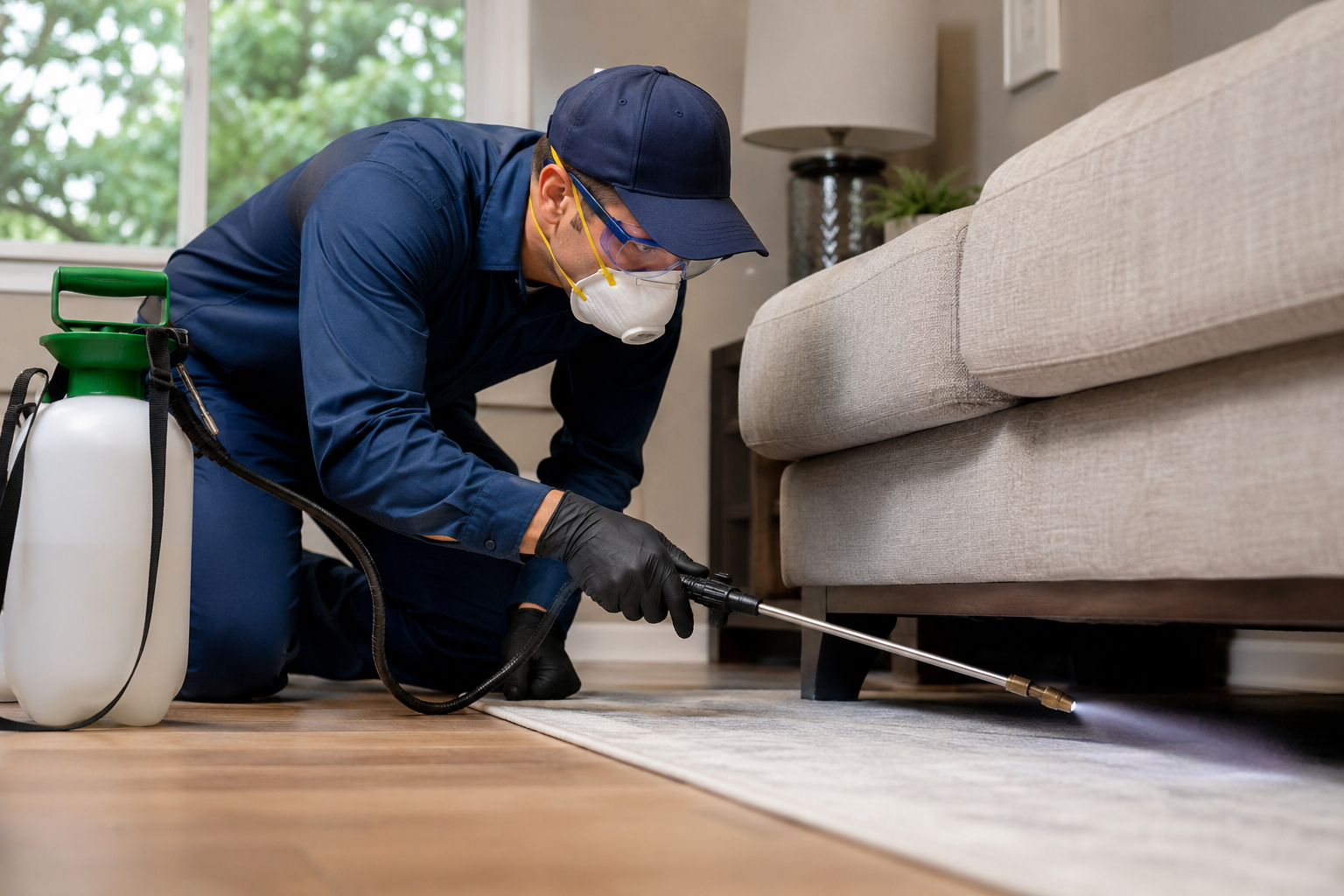
In our previous carpet beetle series, we have seen what these pesky creatures are, how they enter your property uninvited, and where they like to hide once inside your home. We also saw how their larvae cause damage to carpets, rugs, clothing, upholstered furniture, curtains, and other natural fibre materials around the house. With all this information, you most probably now want to know how you can treat a carpet beetle infestation and keep your home protected from further damage.
The good news is that there are several effective methods available, ranging from simple DIY cleaning methods to more advanced professional solutions for severe infestations. Choosing the right carpet beetle treatment depends on how widespread the infestation is, the type of carpet beetle involved, and how quickly the problem is addressed. Read this article to the end to know the various treatment options you have and which methods work best for different levels of infestation.
Identifying the Type of Carpet Beetle First
Before choosing a specific carpet beetle treatment, you need to know exactly what you are dealing with. Different species behave in slightly different ways, though their destructive habits are largely the same. In Lower Mainland residential homes, you will encounter two primary types: the varied carpet beetle and the black carpet beetle.
The Varied Carpet Beetle
Varied carpet beetles are small, oval-shaped insects. They are easily recognized by their mottled pattern of white, brown, and yellow scales on their backs. In Surrey, you will frequently spot adult beetles on windowsills in the late spring and early summer as they try to move outside to feed on pollen from local shrubs and gardens.
However, it is their larvae—often called “woolly bears” due to their dense stripes of hair—that do the actual damage. Tackling this specific species requires thorough cleaning of natural fibers, as they thrive on wool, silk, and feathers. Implementing a targeted, varied carpet beetle treatment involves locating these specific breeding grounds, which are often tucked away in dark corners, baseboard cracks, or old storage boxes in uninsulated crawlspaces.
The Black Carpet Beetle
The black carpet beetle is slightly larger and has a solid, dark brown or shiny black body. Their larvae look quite different from the varied variety. They are elongated, carrot-shaped, and sport a long brush of hairs at their tail end.
These pests are notoriously resilient and can wander far from their original food source, making them harder to track down. A successful black carpet beetle treatment requires a broader inspection strategy because these larvae will happily eat through synthetic blends, dried pet food, leather, and accumulated pet hair hidden beneath heavy furniture—a common issue for Surrey households with heavy-shedding family dogs.
DIY Methods: Carpet Beetle Treatment at Home
Many homeowners begin with carpet beetle treatment at home, especially when the infestation is still small. Consistent cleaning and proper maintenance can sometimes remove the problem before professional treatment becomes necessary.
Deep Vacuuming
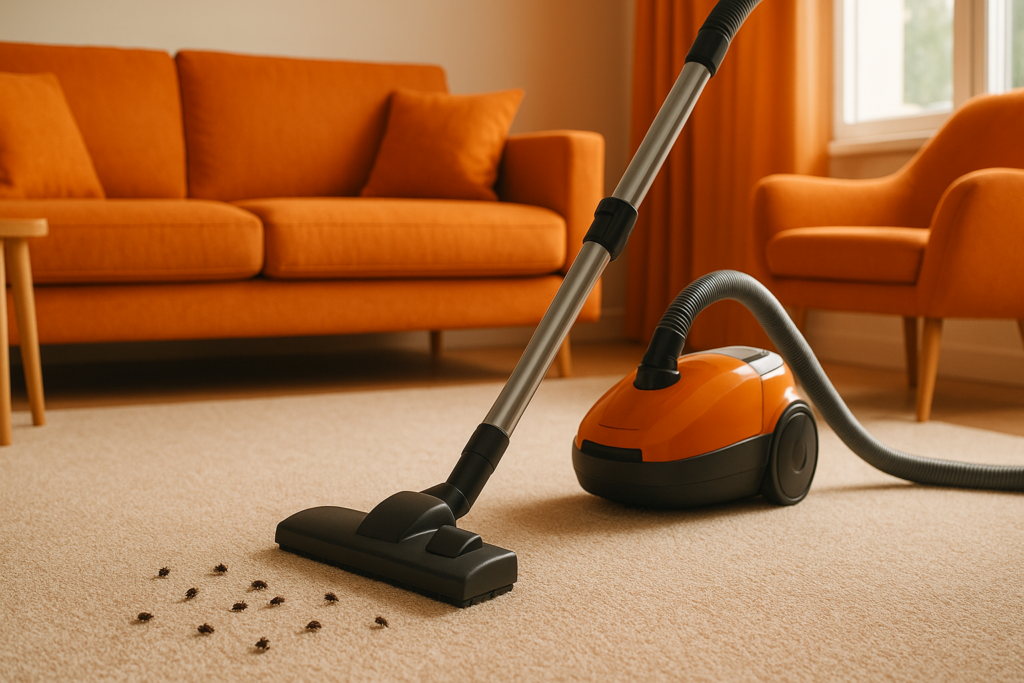
Vacuum all carpets, rugs, upholstery, mattresses, and corners thoroughly. Pay special attention to hidden areas under beds, furniture, and inside closets where larvae and eggs collect. Empty the vacuum bag outside immediately after cleaning to prevent them from crawling back inside.
Steam Cleaning
Steam cleaning helps kill larvae and eggs hidden deep inside carpets and furniture fibres. It is often considered one of the best carpet beetle treatment methods for soft furnishings because heat reaches areas normal vacuuming cannot.
Wash Fabrics in Hot Water
Wash infested clothing, blankets, curtains, and bedding using hot water when safe for the material. Heat helps destroy larvae and eggs that may not be visible.
Reduce Clutter
Old fabrics, lint, pet hair, and unused storage items create ideal hiding spots for carpet beetles. Reducing clutter improves airflow and makes inspections easier. A thorough carpet beetle treatment at home should target every affected room, not just the areas where beetles are seen.
Safe and Eco-Friendly Solutions
Some homeowners prefer safer alternatives, especially in homes with pets, young children, or people sensitive to chemicals. A non toxic carpet beetle treatment focuses on controlling the infestation while reducing chemical exposure indoors.
Diatomaceous Earth
Food-grade diatomaceous earth can be lightly applied around carpet edges, closets, and hidden cracks. It works by damaging the outer layer of insects and larvae.
Vinegar Cleaning Solutions
White vinegar can help clean surfaces and reduce food sources that attract carpet beetles. Use it when wiping shelves, closets, and storage spaces.
Essential Oils
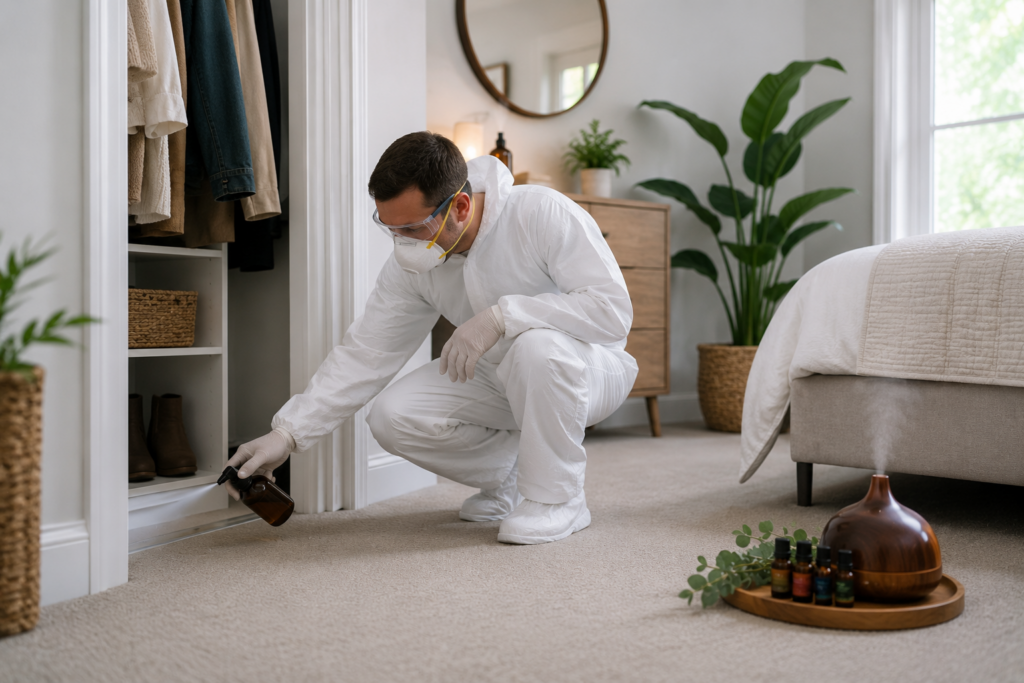
Some essential oils, such as peppermint or clove oil, may help discourage carpet beetles in storage areas. While they may not eliminate a large infestation alone, they can support other treatment methods.
Freezing Small Infested Items
Small fabrics or delicate items can sometimes be sealed in plastic bags and frozen for several days to kill larvae. Although a non toxic carpet beetle treatment may help with mild infestations, severe infestations often require stronger control methods for complete removal.
Chemical and Targeted Interventions
If your initial cleaning efforts do not completely halt the infestation, you might need to step up your strategy with targeted products. This is often necessary when dealing with a widespread or stubborn black carpet beetle treatment scenario, where larvae have spread deep into wall voids or structural cracks.
Insect Growth Regulators (IGRs) and Residual Sprays
When choosing a commercial spray, look for products containing an Insect Growth Regulator. An IGR does not just kill adult insects; it disrupts the biological development of the larvae, preventing them from maturing and reproducing. This breaks the breeding cycle entirely.
Apply a residual insecticide spray directly into cracks, crevices, and closet corners. Avoid spraying large open areas of carpet where people walk; focus instead on the dark perimeters where the pests actually hide. Pairing an IGR with a thorough cleaning routine is often considered the best carpet beetle treatment for moderate infestations that refuse to budge.
Quick Summary: Home Carpet Beetle Treatment
| Method | Action | Main Benefit |
| Deep Vacuuming | Vacuum carpets, furniture, and closets; empty bag outside. | Physically removes eggs and larvae. |
| Steam Cleaning | Use deep steam on carpets and soft furnishings. | High heat kills hidden life stages. |
| Hot Washing | Wash clothes and bedding in hot water. | Destroys unseen pests in fabrics. |
| Reduce Clutter | Clear out old fabrics, lint, and pet hair. | Removes hiding spots and food sources. |
| Diatomaceous Earth | Dust food-grade powder in cracks and edges. | Naturally dehydrates and kills pests. |
| Vinegar Wipe | Wipe shelves and storage with white vinegar. | Removes food scents that attract them. |
| Essential Oils | Use peppermint or clove oil in storage areas. | Repels beetles from nesting. |
| Freezing | Freeze delicate items in sealed bags for days. | Kills all life stages with extreme cold. |
| IGRs & Sprays | Spray Insect Growth Regulators into dark corners. | Breaks the breeding cycle completely. |
Professional Help: Costs and Expectations
Sometimes, despite your best efforts, an infestation can get out of hand. If you find yourself dealing with damage across multiple rooms, or if you suspect they are nesting inside your insulation, under floorboards, or near old bird nests in your attic eaves, it is time to seek professional pest control services.
Determining the Cost of Treatment in the Lower Mainland
A common question homeowners ask is, how much does carpet beetle treatment cost? The price varies based on several factors, including the square footage of your home, the severity of the infestation, and the number of follow-up visits required.
In Surrey and the surrounding Fraser Valley areas, a professional residential pest control treatment for carpet beetles typically ranges between $250 and $450 CAD for a standard townhome or detached family home. A minor, localized treatment in a single room might cost closer to $150, while a severe, whole-house infestation in a large multi-level home requiring intensive targeted residual treatments or heat treatments can exceed $600.
What to Expect from a Professional Service
A professional local technician will start with a thorough inspection to determine whether you need a varied carpet beetle treatment or a solution tailored for black carpet beetles. They know exactly where to look in local home designs—such as along the baseboard tracks of carpeted finished basements or around utility closets.
Professionals use specialized tools and commercial-grade applications that offer long-lasting protection. When figuring out how much does carpet beetle treatment cost, remember to factor in the long-term savings of protecting your expensive wool carpets, designer area rugs, and upholstered furniture from total destruction.
Conclusion: Maintaining a Pest-Free Home
Successfully eliminating an infestation requires patience and a combination of strategies. Whether you opt for a completely non toxic carpet beetle treatment using diatomaceous earth and vinegar, or invest in professional pest control, consistency is the key to victory.
Once your home is clear, prevent future issues by storing seasonal winter clothing in airtight plastic containers, vacuuming regularly beneath heavy furniture, and maintaining tightly fitted mesh screens on your windows during the warm BC spring. Taking decisive action with the best carpet beetle treatment will protect your belongings and keep your living spaces comfortable, clean, and entirely pest-free.
Frequently Asked Questions About Carpet Beetle Removal
How do I know if I need a varied carpet beetle treatment or a black carpet beetle treatment?
Identification comes down to looking closely at the larvae. If you find short, plump, hairy larvae (often called woolly bears) damaging your wool rugs, you need a targeted, varied carpet beetle treatment. If the larvae are longer, carrot-shaped, dark brown, and have a long brush of tail hairs, you are dealing with a different species that requires an aggressive black carpet beetle treatment to clear out hidden nesting sites under heavy furniture.
What is the single most effective carpet beetle treatment at home?
The most reliable carpet beetle treatment at home is a combination of meticulous vacuuming and heat application. Vacuuming removes the physical eggs and insects from floorboard cracks, while laundering fabrics at 60°C or using a powerful steam cleaner destroys hidden larvae on contact.
Can I eliminate an infestation using a non toxic carpet beetle treatment?
Yes, a non toxic carpet beetle treatment can be highly effective for mild or localized infestations. Using food-grade diatomaceous earth along baseboards combined with thorough vinegar wash-downs helps eliminate larvae naturally without introducing harsh chemicals into spaces where pets and children play.
How much does carpet beetle treatment cost for a standard residential home?
When homeowners notice widespread damage, they immediately want to know: how much does carpet beetle treatment cost? For a standard family home or townhouse, a professional treatment generally ranges between $250 and $450 CAD, depending on the severity of the infestation and the size of the property.
What commercial product is considered the best carpet beetle treatment?
The best carpet beetle treatment available commercially is a residual insecticide spray that includes an Insect Growth Regulator (IGR). While standard sprays only kill adult beetles on contact, an IGR disrupts the life cycle of the larvae, preventing them from breeding and halting future generations.
Why did my DIY carpet beetle treatment at home fail to stop the bugs?
A DIY carpet beetle treatment at home usually struggles if the primary breeding source is missed. Pests often hide completely out of sight, such as inside heating vents, behind deep wall voids, or inside old bird nests in the attic, which allows the infestation to return if those structural areas aren’t treated.
Is it worth paying the professional carpet beetle treatment cost?
When balancing the total cost of carpet beetle treatment against the value of your home, the investment pays off by protecting expensive natural materials. Professional exterminators use specialized tools to wipe out resilient populations, saving you thousands of dollars in ruined wool carpets, designer rugs, and upholstered furniture.