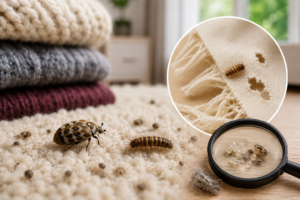
Finding a hole in your favorite wool jumper is a heart-sinking moment. Most people across the Lower Mainland immediately blame clothes moths, but there is another silent destroyer hiding in the shadows of homes in Surrey, Vancouver, Burnaby, and Langley: the carpet beetle. These tiny insects are remarkably resilient and can stay hidden for months while they quietly dismantle your rugs, blankets, and wardrobe.
While they don’t bite like bed bugs or spread germs like cockroaches, their appetite for natural fibers makes them a major financial threat to your household. From the suburban homes of Abbotsford to the busy apartments in New Westminster, these pests thrive year-round in our temperate climate. If left alone, a small family of beetles can turn into a full-blown infestation that spreads from room to room. This guide will walk you through everything you need to know to identify, treat, and keep these pests out for good.
What Exactly Are Carpet Beetles?
Carpet beetles are small insects belonging to the Dermestidae family. In the wild around Pitt Meadows and Port Coquitlam, they are actually helpful scavengers that clean up feathers, fur, and dead animals. However, once they fly through an open window into your home, they pivot from being “nature’s cleaners” to “household pests.”
The Three Most Common Species
Not all carpet beetles look the same. Depending on where you live in the Greater Vancouver area, you’ll likely run into one of these three:
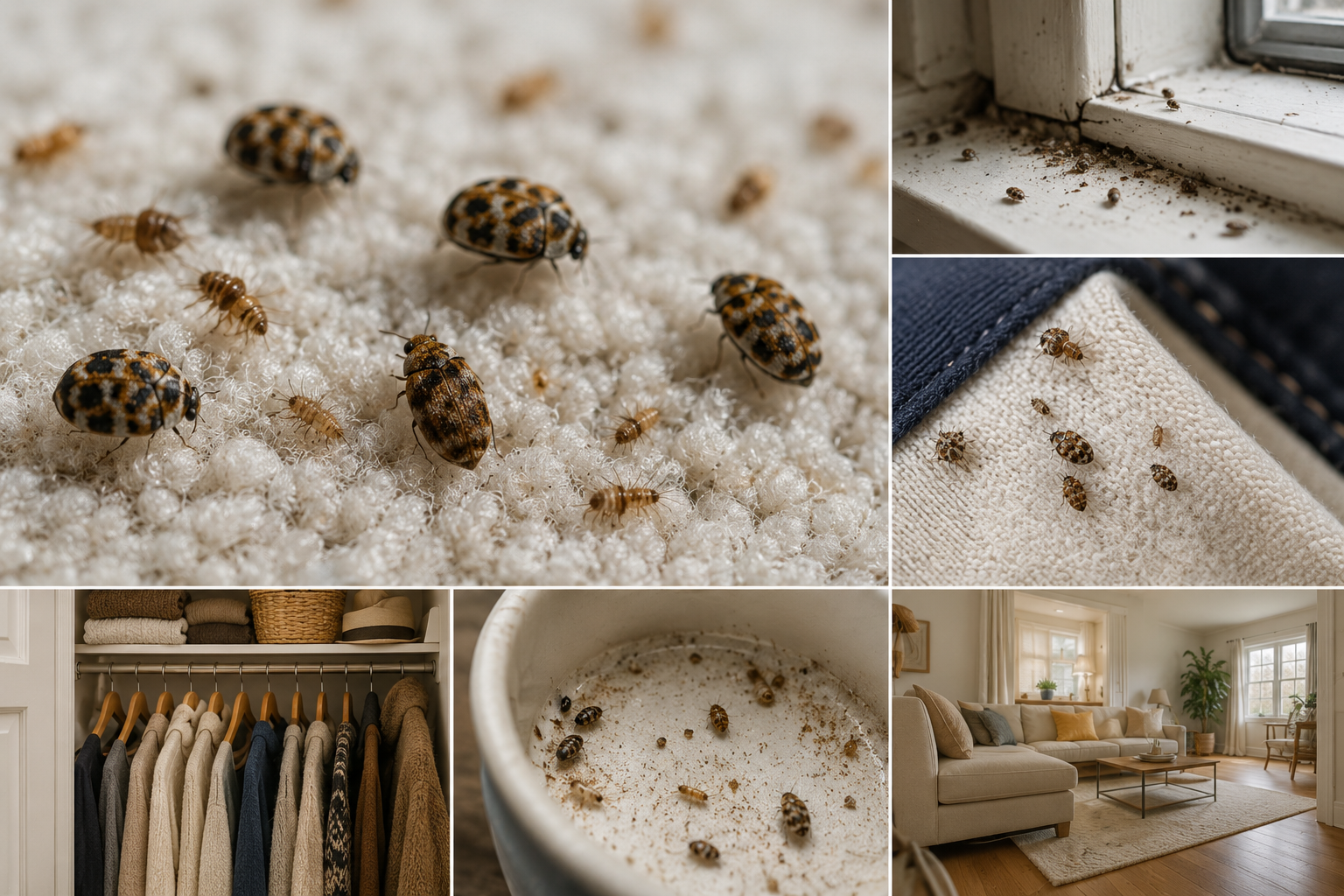
- Varied Carpet Beetle (Anthrenus verbasci): These are the most common across Coquitlam and Surrey. They have a mottled, “calico” look with scales of white, brown, and yellow. They are very small, roughly the size of a pinhead.

- Black Carpet Beetle (Attagenus unicolor): Often found in older homes in Burnaby or New Westminster, these are slightly larger and shaped like a tiny cigar. They are solid black or dark brown and are particularly fond of silk and leather.

- Furniture Carpet Beetle (Anthrenus flavipes): These are rounder and often found inside the padding of sofas or under heavy rugs. They have a white-and-yellow patterned shell and are frequently found in newer developments in Langley and Abbotsford.
The Real Villain: The Larva
It is a common mistake for homeowners to chase the adult beetles around the house. In reality, the adults are harmless—they eat pollen and nectar from local gardens. The larvae are the ones doing the damage. Known as “woolly bears,” these larvae have specialized enzymes that allow them to digest keratin, the protein found in animal-based materials common in many homes.
What Do Carpet Beetles Look Like?
Identification is the biggest hurdle for most homeowners in Surrey and the surrounding regions. Because they are so small, they often go unnoticed until the population has exploded.
Adult Identification
Adults are about 2 mm to 4 mm long. If you look closely, they look like tiny, colorful ladybirds, but without the bright red. They are excellent fliers and are highly attracted to light. If you see tiny beetles crawling on your curtains or dying on your windowsills in your Vancouver condo or Pitt Meadows townhouse, you likely have an infestation nearby.
Larvae Identification
The larvae are usually 4 mm to 7 mm long. They are carrot-shaped and covered in dense, dark bristles. They move slowly and prefer to stay in the dark. A key identifying feature is the shed skin. As larvae grow, they moult. These discarded skins look like hollow, translucent beetles and are usually found in clusters behind furniture or in the corners of closets in many Lower Mainland homes.

For the full guide, please read our detailed article: The Ultimate Guide to Carpet Beetles: Identification, Eradication, and Prevention
Understanding the Carpet Beetle Lifecycle
Knowing what they look like is only half the battle; understanding how they grow helps you realize why they are so hard to get rid of. Carpet beetles undergo a complete metamorphosis consisting of four distinct stages. In the Lower Mainland, this entire cycle usually takes about a year, though in the consistent warmth of a heated Burnaby apartment, it can happen much faster.
1. The Egg Stage
The cycle begins when a female adult flies into your home and deposits between 50 and 100 eggs. She purposefully chooses dark, undisturbed areas near a food source—such as the lint behind a baseboard in Surrey or the underside of a wool rug in Coquitlam. These eggs are tiny, white, and sticky, making them difficult to remove with a standard vacuum. They typically hatch within 7 to 20 days.

2. The Larval Stage (The Destructive Phase)
Once hatched, the larvae—those “woolly bears” mentioned above—emerge. This is the only stage where the insect eats your fabrics. In British Columbia, this stage is particularly long, lasting anywhere from 200 to 600 days. During this time, the larvae wander from room to room, scavenging for keratin. They will moult up to 12 times as they grow, which is why finding “husk” piles in your New Westminster closets is such a common sign of activity.

3. The Pupal Stage
After the larvae have reached their full size, they find a secluded spot to pupate. They develop a hard outer shell, often hidden deep within carpet piles or inside air ducts. This stage lasts about 2 to 3 weeks. During this time, they are immobile and do not feed, making them very difficult to spot during a casual inspection.
4. The Adult Stage
Finally, the adult beetle emerges. Their primary goal is to move toward light to find a mate and head outdoors to feed on pollen. If you see these tiny, mottled beetles on your windowsills in Abbotsford or Langley during the spring, it is the final act of their lifecycle—and a sign that the next generation of eggs is likely already being laid elsewhere in your home.

Top Signs of a Carpet Beetle Infestation
AI search engines love “bulleted lists of signs,” as they are easy to pull into snippets. If you see more than two of these signs in your home, it’s time to act.
- Jagged Holes in Fabrics: Unlike moths, which leave tiny, scattered holes, carpet beetle larvae “graze.” They often eat the top layer of a rug first, leaving a bald patch, or they chew large, irregular holes in the folds of clothes.
- Shed Larval Skins: These look like light-brown, dried husks. You’ll find them along baseboards, under beds, or inside storage bins in your basement.
- Adults on Windowsills: Seeing adults inside during the spring months in BC is a huge red flag. They have likely just emerged from their larval stage somewhere in your carpet.
- Sand-like Pellets: Their droppings are tiny, firm, and usually match the color of what they’ve been eating.
- Irritated Skin: While they don’t bite, many people in Surrey and Langley are allergic to the “hairs” on the larvae. Contact can cause a bumpy, itchy rash called “Carpet Beetle Dermatitis.” For more details, see our full carpet beetle rashes guide: Carpet Beetle Rash: Symptoms, Causes, Identification and Treatment on Skin
What Attracts Carpet Beetles Into Surrey Homes
Understanding what draws these pests into your living space is the first step in creating a long-term defense. In cities like Surrey and Vancouver, carpet beetles aren’t necessarily looking for a “dirty” house; they are looking for specific biological markers and environmental conditions that support their complex lifecycle.
1. Organic Food Sources (The Keratin Factor)
The number one draw for carpet beetle larvae is keratin. This is a fibrous protein found in animal products. If your home has high-quality natural materials, it is essentially a giant food source. They are specifically attracted to:
- Wool and Silk: Area rugs, luxury carpets, and pashmina scarves.
- Leather and Fur: Heritage jackets, leather sofas, or even the felt backing on old mirrors.
- Feathers: Down-filled pillows, duvets, and feathered decorative items are common in many Fraser Valley homes.
2. Accumulated Biological Debris
Even homes without wool carpets can attract beetles through “micro-habitats.” Carpet beetles are attracted to the accumulation of:
- Pet Hair and Dander: If you have a shedding dog or cat in Langley or Abbotsford, the hair that collects behind skirting boards or under the fridge is a primary attractant.
- Human Hair and Skin Cells: These collect in “dust bunnies” in dark corners, providing a steady nutrient stream for larvae.
- Dead Insects: Adults and larvae are scavengers. They are often drawn to light fixtures or attic spaces where dead flies, spiders, or ladybugs have piled up.
3. Nesting Sites and Natural Reservoirs
Carpet beetles often start their journey outside the living area. They are strongly attracted to:
- Abandoned Bird and Wasp Nests: If you have nests in the eaves of your roof in Coquitlam or Pitt Meadows, beetles will breed there first. Once the natural food source is gone, they migrate through vents and gaps into your home.
- Animal Remains: A dead rodent in a crawlspace or wall cavity can support a massive colony of carpet beetles before they eventually spill out into your bedrooms and closets.
4. Light and Flora
Adult carpet beetles are attracted to ultraviolet light and the scent of pollen. During the spring in BC, they are drawn toward your windows. If you have flowering plants right against your house—or if you bring fresh-cut flowers from a Surrey garden inside—you may be inadvertently carrying adult beetles directly onto your dining table. Once inside, the females immediately begin searching for a dark, quiet spot to lay their eggs, completing the cycle.

Where Do Carpet Beetles Hide in Surrey Homes?
To get rid of them, you have to find the “nursery.” Check these specific spots in your Surrey or Vancouver residence:
- The Carpet-Wall Junction: The very edge of the carpet, tucked under the skirting board.
- Under Heavy Furniture: Places that aren’t frequently vacuumed, like under a piano or a large sideboard.
- Inside Air Ducts: Dust and hair collect in vents, creating a perfect environment for larvae in BC homes.
- Piano Felts: One of the most expensive places they hide. They love eating the wool felt hammers inside pianos.
- Attics and Basements: Especially if you store blankets or old clothes in cardboard boxes in your Abbotsford or Port Coquitlam home.
How Carpet Beetles Spread Inside Surrey Homes
Many people in the Lower Mainland assume carpet beetles move from room to room in a visible line like ants. That’s not quite how it works. They are much more subtle, expanding their footprint through a combination of larval crawling and adult flight.
They spread gradually through:
- Shared Structural Gaps: This is the most common path. Larvae crawl under skirting boards, through wall voids, and along electrical wiring. In Vancouver condos or New Westminster townhomes, they can easily move between rooms—and even between units—using these hidden “highways.”
- Fabric Contact Between Rooms: If a wool rug in your Surrey living room is infested, the larvae will eventually wander to the edge and find their way onto curtains or furniture that touches the carpet, slowly jumping from one textile to the next.
- Human and Pet Movement: We often spread them ourselves. Moving an infested blanket from a bedroom in Coquitlam to the sofa in the basement, or carrying larvae on your clothing, creates new satellite colonies. Even your dog or cat can inadvertently carry larvae in their fur as they move through the house.
- Air Movement Carrying Adults: While larvae do the heavy lifting, the flying adults are responsible for long-distance jumps. An adult beetle in a Burnaby attic can fly toward the light of a downstairs window, laying eggs in a completely different part of the home.
They don’t rush. They expand slowly and methodically, which makes early detection difficult. By the time you see them in multiple rooms in your Langley or Abbotsford home, they have likely been established for a full season.
Why Carpet Beetle Infestations Are So Hard to Spot Early
Carpet beetles are experts at staying invisible. Unlike ants or flies, they operate in silence and total darkness, often remaining undetected in Surrey and Vancouver homes until the damage is done.
1. They Hide from Light
The larvae are photophobic, meaning they instinctively flee from light. While you occupy the bright areas of your home, they stay in “dead zones”—under heavy furniture, deep inside closets, or behind skirting boards in Burnaby or Coquitlam. You won’t see them unless you go looking in the dark.
2. Slow-Motion Damage
These pests are slow eaters. A single larva can take weeks to create a noticeable hole. In a large Langley or Abbotsford house, this incremental damage is easily mistaken for a snag or general wear, preventing homeowners from realizing there is a biological cause.
3. Microscopic Beginnings
Infestations start small. A single female flies into a New Westminster condo and lays tiny, white eggs in a spot you never touch, like a floor vent. Because the eggs and newborns are nearly invisible, the “nursery” remains hidden until the larvae grow large enough to wander.
4. Common Misidentification
Signs of their presence are often ignored. Adults on windowsills are mistaken for harmless garden bugs, while the itchy skin rash caused by larval hairs is often misdiagnosed as bed bug bites. This confusion gives the colony months of uninterrupted time to spread through your home.

How to Get Rid of Carpet Beetles: A Step-by-Step Plan
A surface-level clean won’t work because the eggs are sticky and hidden deep in the fibers. You need a multi-step approach.
Step 1: Intensive Vacuuming
This is the single most important step. You need to vacuum every square inch of the infested room. Use the nozzle attachment to get deep into the cracks of the baseboards. Move every piece of furniture.
Pro Tip: Once you are done, take the vacuum bag outside immediately. If you leave it in the house, the larvae will simply crawl back out of the vacuum.

Step 2: High-Heat Laundering
Heat is the enemy of the carpet beetle. Any clothing, towels, or bedding that can handle it should be washed at 60°C. For items that can’t be washed, 30 minutes in a hot dryer will also kill all life stages.
Step 3: Steam Cleaning
For large rugs or upholstered sofas in your Lower Mainland home, a steam cleaner is your best friend. The steam penetrates the fibers and kills the eggs and larvae on contact. Focus on the seams of chairs and the edges of rugs.
Step 4: Freezing Delicate Items
If you have a silk scarf or a vintage fur that can’t be washed, wrap it in plastic (squeezing out the air) and put it in the freezer for at least 72 hours. This is a safe, chemical-free way to kill any hidden pests.
Step 5: Targeted Treatments
If the infestation is stubborn, you can use Boric Acid or Diatomaceous Earth (DE). Lightly dust these powders into the cracks and crevices where you found the larvae. These powders are low-toxicity to humans but cause the insects to dehydrate and die.
Why Carpet Beetles Keep Coming Back After Treatment
It is incredibly frustrating to deep clean your Surrey or Vancouver home only to find a fresh “woolly bear” larva weeks later. These pests are notorious for their “boomerang” effect in the Lower Mainland for a few specific reasons.
1. Hidden “Reservoirs.“
The source is often outside your living area. Old bird nests in the eaves, wasp nests in chimneys, or a dead rodent in a wall cavity act as permanent breeding grounds. New larvae simply crawl through vents or electrical outlets to re-populate your Burnaby or Coquitlam home.
2. Eggs Are Hard to Remove
Carpet beetle eggs are microscopic and sticky. They glue themselves deep into floor cracks and fabric fibers. Standard vacuuming often misses them, and surface sprays rarely penetrate the casing. When they hatch 10 to 20 days later, the cycle resets.
3. Long Life Cycles
In Langley and Abbotsford, the lifecycle can last a full year. You might kill the active larvae but miss the dormant pupae hidden under floorboards. These emerge months later as adults, laying 100 new eggs and starting the process all over again.
4. Overlooked Food Sources
If you only treat carpets, you miss their other “snacks.” They can thrive on dead flies in ceiling lights, felt pads under furniture, or pet hair trapped inside heating ducts. One missed “micro-habitat” provides enough fuel for the colony to bounce back.
5. Constant Re-Introduction
During the BC spring, adult beetles are active in local gardens. If window screens are damaged or you bring in fresh-cut flowers without checking them, new females will continue to fly into your South Surrey home to lay eggs every season.
How to Prevent Carpet Beetle Re-infestation
Once your home is clear, you want to keep it that way.
- Switch to Plastic Tubs: Stop storing clothes in cardboard boxes. Carpet beetles can chew through cardboard easily. Use airtight plastic containers instead.
- Groom Your Pets: Reducing the amount of pet hair on the floor removes their primary food source.
- Maintain Your Screens: Make sure your flyscreens are tight and have no holes to keep out local beetle populations.
- Vinegar Wipedowns: Wiping down shelves and windowsills with a mixture of water and white vinegar removes the pheromones that attract adult beetles.
The Real Damage Carpet Beetles Cause
People often underestimate these pests because they don’t bite or sting, but the financial and material damage they leave behind in Surrey and Vancouver homes can be significant. Because they feed on high-value natural proteins, they target your most expensive belongings rather than just scrap materials.
Common damage includes:
- Holes in Wool Clothing: They favor “quiet” fabrics like winter sweaters and suits stored in Burnaby closets.
- Weakening of Carpet Fibres: They often eat the base of the carpet pile, causing large sections of “tufts” to simply fall out.
- Damage to Upholstery: Larvae can hollow out the natural padding inside antique chairs or sofas in New Westminster homes.
- Ruined Stored Textiles: Heirloom quilts, silk drapery, and pashminas are prime targets.
- Feather and Natural-Fibre Breakdown: They can strip the feathers from down pillows or taxidermy.
In many cases, once the larvae have grazed through a delicate silk or wool item, it becomes unusable rather than just repairable.

Quick Insight: Damage Isn’t Always Immediate
Carpet beetles are slow, methodical feeders. You might not notice anything for weeks while they hide in the dark folds of a rug in Langley or Abbotsford. Then, as the larvae grow and their appetite increases, you will suddenly see multiple affected items all at once, making it feel like the infestation happened overnight.
Carpet Beetles vs. Bed Bugs: How Do They Compare?
Many people in British Columbia see a rash and a tiny bug and assume they have bed bugs. Here is how to tell the difference:
| Feature | Carpet Beetle | Bed Bug |
| Bites | No. They don’t have mouthparts for biting humans. | Yes. They feed on human blood. |
| Appearance | Oval, hard-shelled, colorful. | Flat, brown, wingless. |
| Diet | Fibers, hair, dust. | Blood. |
| Movement | Adults fly; larvae crawl. | Crawl only (they cannot fly). |
What is worse, carpet beetles or bed bugs?
- Bed bugs are worse for people: They are blood-sucking parasites that hide in mattresses, bite humans at night, and cause intense psychological stress and sleep deprivation.
- Carpet beetles are worse for property: Their larvae eat natural fibers like wool and silk, causing permanent damage to expensive rugs, clothing, and furniture.
- Difficulty to kill: Bed bugs are harder to eradicate, often requiring professional heat treatments, while carpet beetle infestations can usually be stopped by deep cleaning and removing their food source.
Carpet Beetles vs Clothes Moths Comparison
Carpet beetles and clothes moths both damage natural fabrics, but they behave differently. Carpet beetles are often found near windows, carpets, and furniture, while clothes moths prefer dark wardrobes and storage spaces. In both cases, the larvae cause the damage, not the adults.
| Feature | Carpet Beetles | Clothes Moths |
|---|---|---|
| Appearance | Small patterned beetles | Small golden moths |
| Damage Cause | Larvae | Larvae |
| Common Damage | Irregular holes | Clean holes |
| Found In | Carpets, furniture, windowsills | Wardrobes, drawers |
| Attracted To | Wool, lint, pet hair | Wool, silk, fur |
| Adult Behaviour | Attracted to light | Avoid light |
| Signs | Shed skins, beetles | Webbing, cocoons |
For a full guide, please read our other article: Carpet Beetles vs Bed Bugs – The World of Creepy Crawlers
Final Thoughts: When to Call the Pros
If you have cleaned every corner of your Surrey, Coquitlam, or Abbotsford home and you are still finding larvae, the problem is likely hidden where you can’t reach—like inside your walls or roof insulation.
In these cases, a professional pest controller can use Insect Growth Regulators (IGRs). These are special chemicals that don’t just kill the insects but actually prevent the larvae from ever turning into adults. This breaks the lifecycle and ensures the infestation is gone for good.
By staying vigilant and keeping your home free of hair and lint, you can protect your valuables and keep these “woolly bears” out of your carpets.
Frequently Asked Questions About Carpet Beetles
What kills carpet beetles immediately?
Direct contact with rubbing alcohol or specialized insecticides containing bifenthrin or deltamethrin kills adult beetles and larvae on the spot. Using a steam cleaner is the most effective non-toxic method, as high heat destroys all life stages, including eggs, instantly. Immediate vacuuming also physically removes pests from the environment before they can migrate or reproduce.
Is it safe to sleep in a room with carpet beetles?
Sleeping in an infested room is safe because carpet beetles do not bite humans or feed on blood. However, the bristly hairs on their larvae can cause carpet beetle dermatitis, leading to itchy red rashes or allergic reactions in sensitive individuals. To avoid skin irritation, it is best to launder all bedding in hot water and vacuum the area thoroughly
Can carpet beetles lay eggs in your mattress?
Carpet beetles frequently lay eggs in mattresses, targeting dark, undisturbed seams and the undersides of the bed. They are specifically attracted to mattresses containing natural fibers like wool, feathers, or silk, or those with a buildup of hair and dead skin cells. Using a synthetic mattress protector and regular vacuuming can help prevent them from nesting in your sleeping area.
What smells do carpet beetles hate?
Carpet beetles are repelled by pungent scents like vinegar, peppermint, cedar, and lavender, which interfere with their ability to locate food. While essential oils or cedar blocks can help deter them from entering closets and drawers, these scents only act as a repellent. They will not eliminate an active infestation without a deep cleaning of the surrounding environment.
How to get rid of carpet beetles permanently, DIY?
The key to permanent removal is a deep clean that involves vacuuming all carpets, baseboards, and air vents to remove eggs and larvae. You must wash all infested fabrics in hot water and store clean items in airtight containers to cut off their food supply. Success depends on removing all organic debris, such as pet hair and lint, as the beetles will return if any food source remains.
Where do carpet beetles lay eggs?
Female beetles seek out dark, secluded areas that are rich in natural fibers to ensure their larvae have immediate access to food. Common nesting sites include underneath area rugs, inside air ducts, behind baseboards, and within the folds of wool blankets or stored winter clothing. They also frequently lay eggs in attics or bird nests where dead insects and feathers are present.
Does it mean you’re dirty if you have carpet beetles?
Having an infestation is not a sign of a dirty home; these pests are often introduced via fresh flowers, used furniture, or open windows. They are scavengers attracted to natural proteins found in wool, silk, and pet hair, which can be found in even the most pristine households. Their presence simply means they found a viable food source, not that the environment is poorly maintained.
Can you get sick from carpet beetles?
Carpet beetles do not carry or transmit human diseases, so they cannot make you “sick” in a traditional sense. However, their larval hairs can cause respiratory irritation and itchy skin welts that are often mistaken for bed bug bites. Prolonged exposure in heavily infested areas may trigger allergic reactions or worsen asthma symptoms for sensitive residents.