If you went through our carpet beetle damage guide, you should next find out how a carpet beetle infestation begins before you are dealing with widespread fabric damage, hidden larvae, and a much larger pest problem inside your Surrey BC home.
We have written this article to help you learn how a varied or furniture carpet beetle infestation starts, the warning signs to watch for, what causes them to spread, and the best ways to remove and prevent them from returning.
Keep reading to the end, and you will be able to identify a severe carpet beetle infestation early, understand how serious the problem is, and take the right steps before the infestation spreads further through your home.
What Is a Carpet Beetle Infestation?
A carpet beetle infestation happens when carpet beetles begin breeding and feeding inside the home instead of simply flying indoors occasionally. Seeing one adult beetle near a window does not always mean there is an infestation. Adult carpet beetles commonly enter homes through open windows, flowers, vents, or clothing.
An active infestation usually means larvae are already feeding in hidden areas. Signs of a true furniture carpet beetle infestation include repeated sightings of larvae, shed skins, fabric damage, or beetles appearing in multiple rooms.
Larvae are the most important sign because they cause the actual damage. Finding several larvae under furniture, inside wardrobes, around carpets, or near stored fabrics usually indicates an established infestation that requires treatment.
How Carpet Beetle Infestations Start
Most carpet beetle infestations start when adult beetles enter the home and lay eggs in dark areas containing natural fibres and organic debris. Common entry points include open windows, vents, cracks, second-hand furniture, flowers, and contaminated fabrics.
Carpet beetles are attracted to areas containing:
- Dust buildup
- Pet hair
- Lint accumulation
- Wool clothing
- Fur or feathers
- Dead insects
- Rarely cleaned fabrics
Infestations usually begin in undisturbed areas such as wardrobes, loft spaces, under heavy furniture, behind skirting boards, and inside storage boxes because these areas provide both food and protection for larvae.
Early Signs: How to Know If You Have a Carpet Beetle Infestation
Early carpet beetle infestations are often difficult to detect because larvae remain hidden while feeding. In many homes, fabric damage becomes visible before the insects themselves are noticed.
Common early signs include:
- Small holes in clothing or fabrics
- Shed larval skins near carpets or furniture
- Hairy larvae crawling slowly on surfaces
- Bald patches in wool rugs
- Beetles near windows or light sources
- Damage inside wardrobes or storage areas
Repeated fabric damage in multiple areas of the home is often one of the clearest signs of an active carpet beetle infestation.

What Does a Carpet Beetle Infestation Look Like?
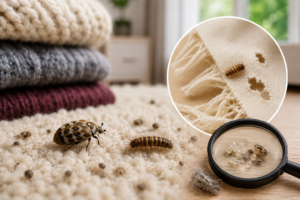
A carpet beetle infestation usually appears as irregular damage across fabrics, carpets, upholstery, and stored materials. Unlike moth damage, the affected areas often look scattered rather than cleanly shaped.
Common visible signs include:
- Thinning carpet fibres
- Holes in wool clothing or blankets
- Damaged upholstery seams
- Brown shed skins near skirting boards
- Larvae hidden in lint or dust
- Small fecal pellets near infested areas
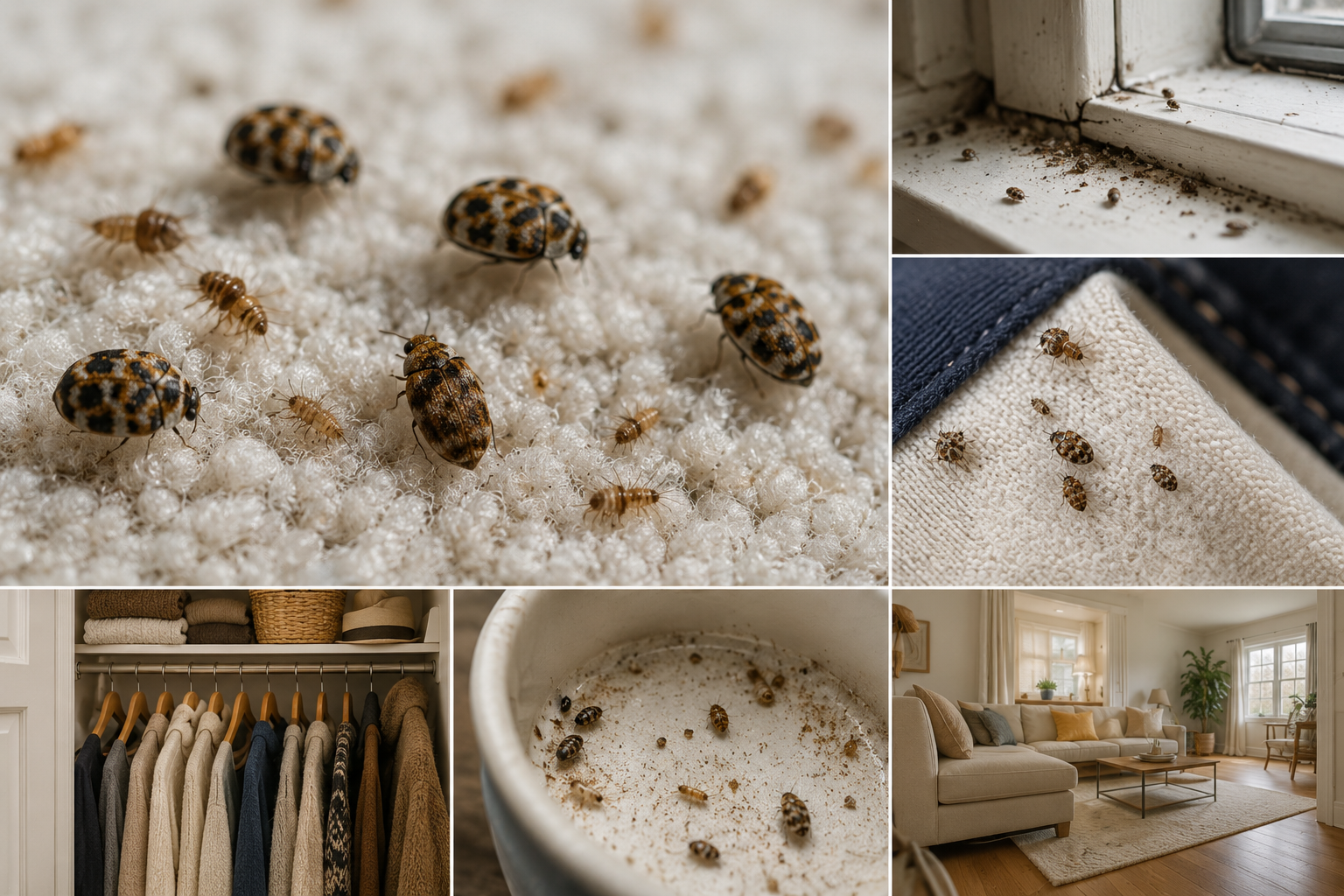
Adult carpet beetles are small, rounded beetles often found near windows. Carpet beetle larvae look different. They are brown, hairy, elongated, and commonly found in dark hidden areas where feeding occurs.
How to Find a Carpet Beetle Infestation in Your Home
Finding the breeding area is important because carpet beetles usually spread from hidden locations before moving into other parts of the home.
Inspect these areas carefully:
- Under beds and sofas
- Inside wardrobes
- Beneath rugs and carpets
- Around skirting boards
- Air vents and floor vents
- Loft spaces
- Storage boxes
- Pet bedding
Use a flashlight to inspect dark corners and fabric storage areas. Look for larvae, shed skins, lint buildup, damaged fibres, and insect debris. Areas with dust and pet hair are especially important because they provide food for developing larvae.
What Causes Carpet Beetle Infestation to Spread
A
severe carpet beetle infestation spreads when larvae continue feeding and breeding without interruption. Because larvae hide in dark areas, infestations can grow for months before homeowners notice visible damage.
The main reason infestations spread is the availability of keratin-rich materials such as:
- Wool
- Hair
- Fur
- Feathers
- Leather
- Pet dander
Cluttered rooms, stored fabrics, dust buildup, and rarely cleaned spaces create ideal conditions for infestation growth. Warmer seasons can also increase activity because adult beetles become more active during spring and summer.
How to Deal With Carpet Beetle Infestation Immediately
Immediate action helps prevent carpet beetle larvae from spreading into more rooms and damaging additional fabrics.
Start by:
- Vacuuming all affected areas thoroughly
- Emptying the vacuum contents outside immediately
- Washing infested fabrics at safe high temperatures
- Sealing contaminated items in plastic bags
- Removing dust, lint, and pet hair buildup
Focus on hidden areas such as under furniture, wardrobe corners, skirting edges, and storage spaces because these are common breeding zones. Surface cleaning alone is usually not enough if larvae remain hidden deeper inside the home.
Small infestations may improve with intensive cleaning, while larger infestations often require professional treatment.

How to Get Rid of Carpet Beetle Infestation
Getting rid of a carpet beetle infestation in house requires removing larvae, eggs, food sources, and hidden breeding areas. Targeting only adult beetles will not solve the problem because larvae usually remain hidden in carpets, furniture, and storage areas.
Deep Vacuuming
Vacuum all high-risk and hidden areas thoroughly, including carpets, rugs, furniture seams, skirting boards, wardrobes, vents, and spaces under beds and sofas. This step removes larvae, eggs, shed skins, dust, lint, and organic debris that support infestation growth. Focus on slow, repeated vacuuming rather than a single clean. Empty the vacuum outside immediately after use to prevent re-spreading any larvae or eggs back into the home.
Steam Cleaning
Steam cleaning is used to reach deep into carpets, upholstery, and fabric furniture, where vacuuming cannot fully remove hidden larvae. The heat helps kill larvae and disrupts breeding activity inside thick or layered fabrics. Pay special attention to carpet edges, furniture joints, and dark, undisturbed areas where carpet beetles are most likely to survive. This step is especially useful in rooms with heavy carpeting.
Washing Fabrics
Wash all affected or exposed fabrics such as bedding, clothing, curtains, and soft furnishings. Use hot water where fabric care labels allow, as heat helps destroy both larvae and eggs. After washing, ensure items are fully dried before storing them again. Clean fabrics should ideally be stored in sealed containers to reduce the chance of reinfestation.
Insecticide Treatment
Insecticides may be necessary for larger or persistent infestations, especially where larvae are hiding in cracks, skirting gaps, vents, or inaccessible breeding areas. Apply treatments carefully and follow product instructions exactly. Focus on hidden infestation zones rather than only visible beetle activity to ensure the full lifecycle is disrupted.

How to Treat Carpet Beetle Infestation Long-Term
Long-term treatment focuses on stopping surviving eggs and larvae from restarting the infestation after initial cleaning.
Continue checking for:
- New larval activity
- Fresh fabric damage
- Shed skins
- Beetles near windows
Vacuum frequently for several weeks after treatment and continue inspecting hidden areas regularly. Follow-up monitoring is important because missed eggs may hatch later and restart the infestation cycle.
How to Stop Carpet Beetle Infestation From Returning
Preventing future infestations depends on removing food sources and limiting hidden breeding areas.
Important prevention steps include:
- Vacuum carpets and upholstery regularly
- Store fabrics in sealed containers
- Clean under furniture often
- Reduce dust and pet hair buildup
- Seal cracks and entry gaps
- Inspect second-hand furniture carefully
- Wash stored fabrics periodically
Natural fibre materials require extra attention because carpet beetle larvae prefer feeding on wool, fur, feathers, and similar materials.
How Long Does a Carpet Beetle Infestation Last?
A bad carpet beetle infestation can last several months or even years if larvae continue finding food and breeding areas inside the home.
Infestation length depends on:
- Infestation size
- Amount of available food
- Cleaning frequency
- Indoor temperature
- Hidden breeding locations
- Treatment effectiveness
Homes with heavy dust buildup, stored fabrics, or untreated breeding areas often experience longer infestations because larvae continue developing unnoticed.
Prevention: Avoiding Future Carpet Beetle Infestations
Preventing carpet beetle infestation in house is easier than removing an established infestation. Regular cleaning and inspection greatly reduce the risk of larvae developing indoors.
A strong prevention routine includes:
- Seasonal deep cleaning
- Inspecting wardrobes regularly
- Vacuuming skirting boards and vents
- Cleaning beneath heavy furniture
- Proper storage of wool fabrics
- Reducing indoor dust buildup
- Monitoring unused rooms and storage areas
Routine inspections help detect infestations early, before larvae spread through multiple areas of the home.

Final Recaps
A bad carpet beetle infestation becomes serious once larvae begin feeding and breeding inside hidden areas of the home. Most infestations spread quietly through carpets, clothing, upholstery, and stored fabrics before visible damage appears.
The best way to control carpet beetles is through early detection, deep cleaning, targeted treatment, and long-term prevention. Identifying larvae early is especially important because they cause most damage to infestations.
Regular vacuuming, dust control, fabric inspection, and proper storage remain the most effective ways to prevent carpet beetle infestation in house from returning.
Carpet Beetle Infestations Frequently Asked Questions
Can a carpet beetle infestation cause health issues or rashes?
Yes, a severe infestation can cause skin irritation. Carpet beetles do not bite or sting, but the larvae shed thousands of tiny, prickly hairs as they grow. When these hairs contact human skin or are breathed in, they can trigger an allergic reaction known as carpet beetle dermatitis, resulting in itchy, red welts that look like bedbug bites.
Do carpet beetles build nests inside the home?
No, carpet beetles do not build central nests like ants or wasps. Instead, an infestation spreads across multiple scattered breeding spots. The female beetle lays individual eggs directly onto food sources, such as under heavy furniture, inside dark wardrobe corners, or deep within floorboard cracks where lint gathers.
How can I tell a carpet beetle infestation apart from a clothes moth problem?
The main difference is the pattern of damage and the traces left behind. Carpet beetle larvae tend to graze across a large area, leaving wide, irregular bare patches and shedding hard, brown, translucent skins. Clothes moths usually feed in one concentrated spot, leaving silken webs, cocoons, and neat holes behind.
Can you have a carpet beetle infestation in a house with only synthetic carpets?
Yes, your home can still suffer a major infestation even if your carpets are 100% nylon or polyester. While the larvae cannot digest synthetic fibres, they will eagerly feed on the organic debris that accumulates on top of and beneath those carpets, including pet dander, human hair, dropped food crumbs, and dead dust mites.
Does a messy house cause a carpet beetle infestation to happen?
Not initially, as adult beetles fly into clean and messy homes alike simply by following light or scent. However, accumulated clutter, dust, and unvacuumed pet hair provide the ideal environment for a small group of insects to rapidly turn into a widespread infestation, as it gives the larvae endless hiding spaces and food.
Can carpet beetle larvae travel between different flat units or terraced houses?
Yes, an infestation can easily spread between adjoining properties. The larvae are active crawlers and can travel through wall cavities, under skirting boards, along shared plumbing pipes, and through communal ventilation shafts to find new food sources if their original population grows too large.
Can freezing temperatures eliminate a carpet beetle infestation in clothing?
Yes, extreme cold is highly effective for clearing infestations from delicate items you cannot hot-wash. To kill all life stages—including the resilient eggs—you must place the infested items inside sealed plastic bags and leave them in a domestic freezer at -18°C or colder for at least two weeks.