
You may never know you have carpet beetle larvae until you understand what these pests are, the damage they cause, and where they hide. In Surrey, BC, many homeowners are already living with carpet beetles without realizing it. We have seen homeowners call us frantically, convinced they have a bed bug infestation because of red, itchy welts on their skin, only for us to discover that the “bites” are actually allergic reactions caused by the microscopic, prickly hairs shed by carpet beetle larvae hiding inside bedrooms, carpets, and furniture.
These silent destroyers do not just invade your space; they slowly feed on rugs, wool clothing, upholstery, and valuable fabrics from the inside out. Because they stay hidden in dark, undisturbed areas, most infestations are discovered only after noticeable damage appears. To help you identify carpet beetle larvae in house early and protect your home, this article explains what carpet beetle larvae are, where they come from, the signs to watch for, and how to properly deal with an infestation.
What are Carpet Beetle Larvae?
Carpet beetle larvae are the immature stage of carpet beetles, and they are the real reason homeowners experience damage inside the home. While adult carpet beetles mainly fly around windows and light sources, the larvae quietly hide and feed on fabrics, lint, and animal-based materials for weeks or even months before becoming adults.
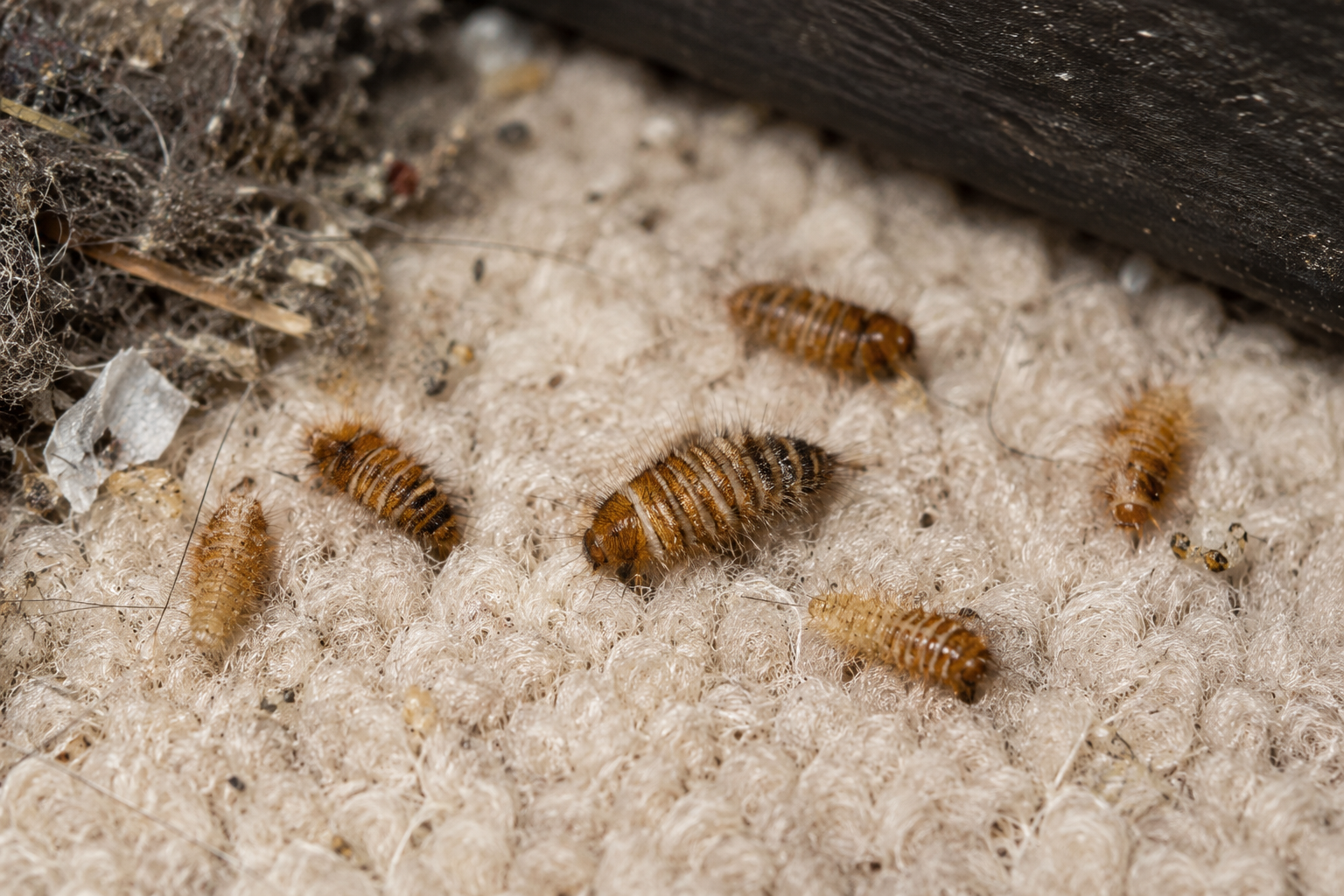
Most larvae are brown, reddish, or tan and are covered with tiny bristle-like hairs. Some appear striped, while others look like tiny fuzzy worms crawling slowly along carpets or walls. They avoid light and prefer hidden areas, which is why many infestations grow for a long time before homeowners realize there is a problem.
One of the biggest misconceptions is that varied carpet beetle larvae bite people. They do not bite like bed bugs. However, their tiny hairs can trigger allergic skin reactions when they come into contact with bedding, clothing, furniture, or air circulation systems. We have inspected homes where families spent weeks treating for bed bugs, only to discover carpet beetle larvae hidden inside closets, under beds, and beneath rugs.
What Do Carpet Beetle Larvae Look Like?
Carpet beetle larvae are small, oval-shaped insects covered with tiny bristle-like hairs. Many homeowners describe them as looking like fuzzy worms or hairy caterpillars slowly crawling along carpets, walls, or fabrics.
Most carpet beetle larvae are:
- Brown, tan, or reddish in colour
- Between 2 mm and 5 mm long
- Covered in fine hairs or bristles
- Wider toward the back of the body
- Slow-moving compared to other household pests
Some species also have striped or banded patterns across their bodies. As they grow, the larvae shed their skins several times, which is why homeowners often find dry, fuzzy-looking skins near infested areas.
One reason carpet beetle larvae are commonly mistaken for bed bugs is that they are often discovered near beds, clothing, or furniture. However, unlike bed bugs, carpet beetle larvae look hairy and worm-like instead of flat and oval-shaped.

Carpet Beetle Larvae Lifespan
Baby carpet beetle larvae can live anywhere from 2 months to over 1 year, depending on indoor conditions and food availability. Warm homes with plenty of fabrics, pet hair, lint, or organic debris allow larvae to survive and develop much longer.
The larval stage is the longest part of the carpet beetle lifecycle. During this stage, the larvae continue feeding, growing, and shedding their skins several times before becoming adult carpet beetles.
Factors that affect their lifespan include:
- Indoor temperature
- Humidity levels
- Access to food sources
- Type of material available for feeding
- How quickly the infestation is discovered and treated
Once fully developed, the black carpet beetle larvae pupate and eventually emerge as adult carpet beetles ready to reproduce again.
Where Do Carpet Beetle Larvae Come From?
Many homeowners assume baby carpet beetle larvae appear randomly, but every infestation starts when adult carpet beetles find a safe place to lay eggs. Here are the most common ways they end up inside homes:
- Adult carpet beetles fly indoors from outside: During warmer months, adult beetles commonly enter homes through open windows, doors, attic vents, damaged screens, and small cracks around the exterior.
- Second-hand items may already contain eggs or larvae: Used furniture, old rugs, thrifted clothing, blankets, and storage boxes sometimes carry hidden carpet beetle activity into the home without homeowners realizing it.
- Outdoor nesting areas increase infestation risk: Carpet beetles are often found around bird nests, rodent nests, dead insects, animal remains, and garden vegetation before eventually moving indoors.
- Stored fabrics attract egg-laying beetles: Closets filled with wool clothing, stored blankets, rugs, and long-undisturbed fabrics provide ideal places for beetles to lay eggs.
- Pet hair and lint create feeding areas for larvae: Hair buildup under furniture, inside vents, and around pet bedding gives newly hatched larvae an immediate food source.
- Dark, undisturbed spaces allow infestations to grow unnoticed: Basements, attics, storage boxes, and unused rooms often become hotspots because they are rarely cleaned or inspected deeply.
- Dead insects inside the home can attract carpet beetles: Adult beetles are drawn to areas with dead bugs trapped near windows, light fixtures, attics, or wall voids because larvae can feed on them later.
Where Do Carpet Beetle Larvae Hide in Homes?
One reason carpet beetle larvae become difficult to control is that they stay hidden in areas homeowners rarely inspect carefully. They avoid bright, open spaces and prefer dark areas with little disturbance.
- Under Furniture and Heavy Appliances: Larvae commonly hide beneath couches, beds, dressers, and furniture where lint, hair, and dust collect over time. They thrive in the layer of “dust bunnies” that sits undisturbed for months.
- Along Carpet Edges and Baseboards: The edges of carpets often trap food particles, fabric fibres, and debris. Larvae wedge themselves into the gap between the carpet and the baseboard, making them invisible to standard vacuuming.
- Inside Closets and Storage Areas: Closets containing wool sweaters, blankets, jackets, or seasonal clothing create perfect feeding grounds. They especially love the dark corners of walk-in closets where air doesn’t circulate.
- Beneath Pet Beds and Cushions: Pet hair and dander trapped under furniture or inside pet bedding provide a constant food source. If your pet sheds heavily, these areas become prime breeding grounds.
- Inside Attics, Vents, and Wall Voids: Large infestations may spread into hidden structural areas where dead insects, dust, and organic debris accumulate. They often travel through HVAC ducts to reach different rooms.
- Under Stored Rugs and Fabrics: Rolled carpets, folded blankets, and long-term stored fabrics are common hotspots because they remain undisturbed for long periods.

What Do Carpet Beetle Larvae Eat?
Carpet beetle larvae mainly feed on materials containing keratin, which is a natural protein found in animal-based products. This is why they damage fabrics instead of feeding on wood or household surfaces.
- Wool Carpets and Rugs: Wool is one of the most common materials attacked because it contains natural animal fibres that larvae can digest easily. They will often eat the underside of a rug first.
- Clothing and Blankets: Sweaters, coats, scarves, and blankets made from wool, silk, or fur are frequent targets. Even a small amount of silk in a blend is enough to attract them.
- Upholstered Furniture: Larvae often feed inside furniture stuffing, fabric seams, and areas where dust accumulates. They are particularly fond of down-filled cushions.
- Pet Hair and Lint: One of the biggest hidden food sources is accumulated pet hair beneath furniture and along carpet edges. This allows an infestation to survive even if you don’t have wool carpets.
- Dead Insects and Animal Materials: Larvae also feed on dead insects trapped in light fixtures, vents, attics, or wall voids. They will also consume feathers, leather, and even dried animal hides.
- Dirty Fabrics and Stored Textiles: Clothing with sweat, oils, or food residue becomes even more attractive because the organic buildup helps larvae feed more easily.
How Big Are Carpet Beetle Larvae?
Carpet beetle larvae are small but visible if you know what to look for. Most grow between 2 mm and 5 mm long, depending on their species and stage of development. Young larvae are extremely tiny—almost like a speck of dust—and often difficult to notice against carpets.
As they mature, they become longer, more oval-shaped, and visibly hairy. Many homeowners describe them as looking like small fuzzy worms slowly crawling along walls or fabric surfaces. Another common sign is their shed skins. As larvae grow, they molt several times before becoming adult beetles. These dry, brownish, hollow skins are often found near feeding areas and hidden corners, appearing slightly translucent and amber-colored.
Signs of Carpet Beetle Larvae in Your Home
Black carpet beetle larvae are rarely noticed immediately. In most homes, the damage appears before the pests themselves are discovered.
- Irregular Holes in Fabrics: Unlike normal wear and tear or moth damage (which is often scattered), carpet beetle damage appears as concentrated, uneven holes in rugs, sweaters, blankets, or upholstery. They tend to “graze” one area until it is threadbare.
- Hairy Shed Skins: Finding brown, fuzzy-looking shed skins is one of the clearest indicators of active larval development. These are usually found in clusters in the dark corners of drawers or under rugs.
- Tiny Larvae Crawling Slowly: You may occasionally notice larvae moving along walls, carpet edges, storage shelves, or near windows as they look for new food sources or a place to pupate.
- Damage Under Furniture: Because they hate light, infestations often begin beneath heavy furniture where fabrics remain untouched for months. You may find the backing of a rug completely eaten away while the top looks fine.
- Adult Beetles Near Windows: Adult carpet beetles are attracted to light. If you find tiny, round, mottled beetles on your windowsills in the spring, it is a strong signal that a generation of larvae just finished feeding somewhere in your home.
- Unexplained Skin Irritation: Some people develop “carpet beetle dermatitis.” These are itchy rashes or welts caused by contact with the tiny hairs shed by larvae. If you have “bites” but no evidence of bed bugs, this is a likely culprit.

Are Carpet Beetle Larvae Harmful?
While they don’t bite or carry diseases, carpet beetle larvae are a serious threat to both your property and your physical comfort. In Surrey homes, these scavengers are more than a nuisance—they are destructive pests that can cause the following real damages:
- Destruction of Property: They feed on keratin, meaning they will systematically eat through wool rugs, silk clothing, leather, and fur, often leaving items beyond repair.
- Allergic Reactions: Their shed hairs (setae) are microscopic and barbed. Contact with these hairs causes “carpet beetle dermatitis,” which results in itchy, red welts often mistaken for bed bug bites.
- Respiratory Issues: In large infestations, these tiny hairs can become airborne. If they are sucked into your HVAC system, they can cause sneezing and eye irritation for those with asthma or allergies.
- Food Contamination: They can migrate to pantries to feed on high-protein items like dried pet food or seeds, contaminating your food supply with shed skins and waste.

How to Deal With Carpet Beetle Larvae
Removing carpet beetle larvae requires a strategic approach. If eggs and hidden food sources remain, the infestation will return within weeks.
- Perform Deep Vacuuming: Do not just hit the open floor. You must vacuum carpets, rugs, vents, closets, baseboards, and underneath furniture using a nozzle attachment. Focus heavily on the “tack strip” area where the carpet meets the wall, as this is a primary hiding spot.
- Wash Fabrics Using Heat: Wash bedding, blankets, clothing, and curtains in hot water (at least 60°C). For delicate items, a high-heat dryer for 30 minutes or professional dry cleaning is necessary to destroy both larvae and eggs.
- Inspect All Storage Areas: Pull everything out of your closets and storage bins. Look for fabric damage, fecal pellets, or shed skins. If you find an infested item, check everything near it.
- Remove Heavily Infested Items: If a rug or piece of furniture is badly damaged and “crawling,” it may be better to seal it in plastic and discard it. These items can act as a “mother ship” for the infestation.
- Reduce Food Sources: Clean out the hair and dust that accumulates behind the fridge, under the stove, and inside floor registers. This removes the “bridge” that allows them to move through the house.
- Seal Exterior Entry Points: Repair damaged window screens and use caulk to seal cracks around window frames, doors, and vents. This prevents the next generation of adults from flying in to lay eggs.
- Contact a Professional Pest Control Company: Carpet beetles are notoriously difficult to fully eradicate because they hide in wall voids and insulation. Large infestations usually require professional-grade residuals and growth regulators to break the life cycle completely.
7 Tips to Prevent Carpet Beetle Larvae Infestation
- Vacuum Hidden Areas Frequently: Use your vacuum’s crevice tool once a month to clean under furniture, along baseboards, and inside closet corners where pet hair and lint accumulate.
- Wash Clothes Before Storing Them: Never store “worn once” clothing. Perspiration, skin oils, and food stains make natural fibres significantly more attractive to egg-laying beetles.
- Use Airtight Storage Containers: Cardboard boxes are not protective. Use sealed plastic containers with gaskets to store woollen blankets and seasonal clothing.
- Keep Pet Areas Extremely Clean: Pet hair is the #1 fuel for varied carpet beetle larvae infestations in modern homes. Vacuum pet beds and the areas surrounding them at least twice a week.
- Inspect Second-Hand Items Carefully: Before bringing used rugs, furniture, or vintage clothes into your home, inspect them outdoors in bright light for any signs of shed skins or holes.
- Reduce Clutter in Storage Spaces: The more “stuff” you have sitting in a dark basement or attic, the more hiding spots you provide. Keep storage areas organized and elevated off the floor.
- Respond to Early Warning Signs Quickly: If you see one larva or one shed skin, don’t wait. A single female can lay up to 100 eggs, and a small problem can become a house-wide crisis in just a few months.

Frequently Asked Questions About Carpet Beetles
What does it mean if I find carpet beetle larvae in house?
It usually means there is an active carpet beetle infestation in your home. Adult beetles have already laid eggs somewhere nearby, and larvae are now feeding on fabrics, lint, or organic debris in hidden areas.
Should I be worried if I found a carpet beetle larvae?
Yes, you should take it seriously. One larva often means more are nearby, and they can damage carpets, clothing, and upholstery if the infestation is not controlled early.
How to kill carpet beetle larvae?
Vacuum thoroughly, wash fabrics in hot water, and dry on high heat. Remove lint, pet hair, and infested items. For heavy infestations, professional pest control may be needed.
How did I get carpet beetle larvae?
They usually come from adult beetles entering through windows, doors, or vents, or through infested items like used furniture, rugs, clothing, or storage boxes.
How to find carpet beetle larvae nests?
They don’t build nests. Instead, check hidden areas where they feed, such as under furniture, carpet edges, closets, storage boxes, and pet bedding, where lint and hair collect.
