
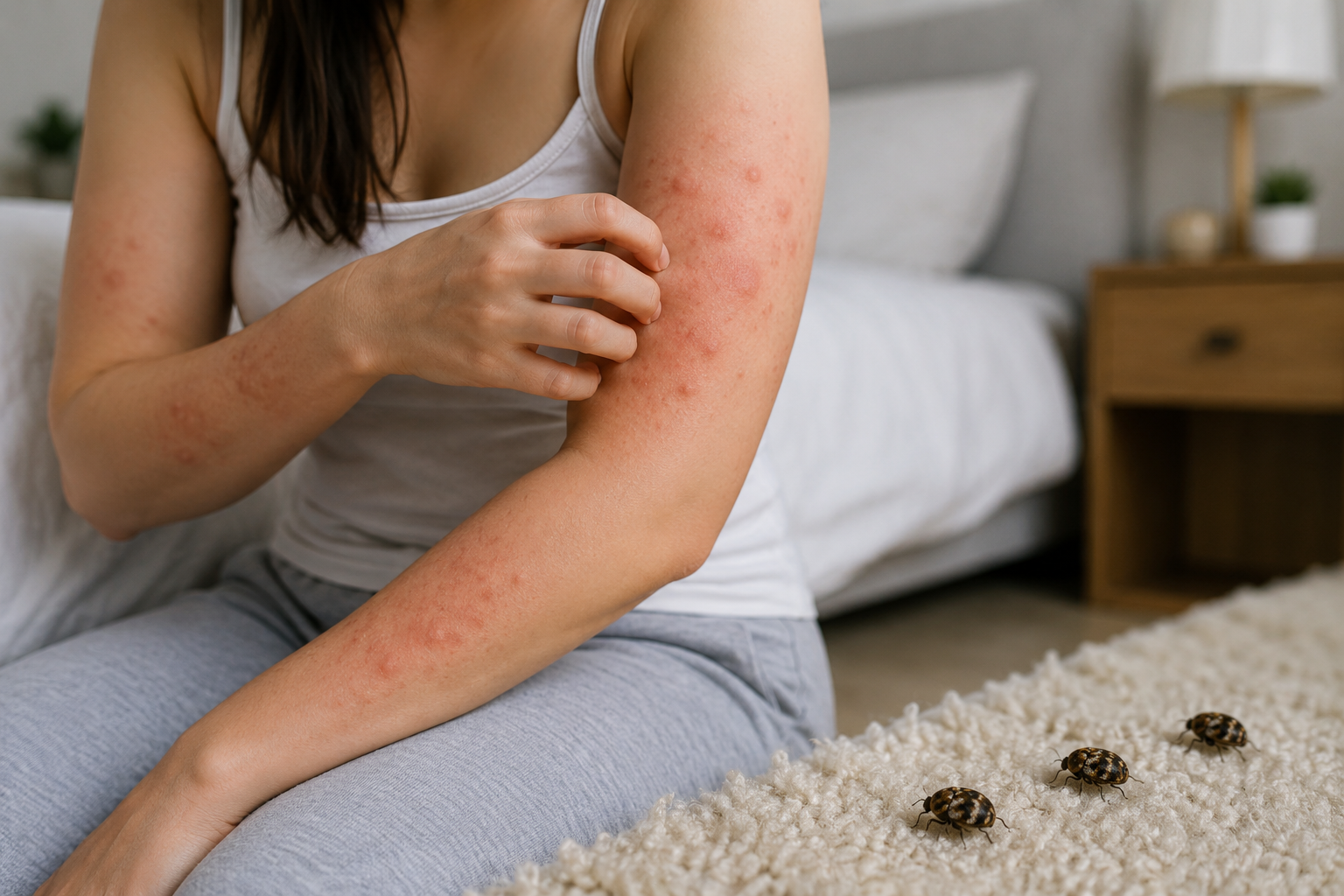
A woman sitting on a bed scratching a red, bumpy carpet beetle rash on her arm while several varied carpet beetles crawl on the carpet nearby.

A carpet beetle rash is a skin reaction caused when your skin comes into contact with tiny hairs from carpet beetle larvae. These hairs are called hastisetae and can irritate the skin, leading to an allergic response. Many people confuse this condition with insect bites, but carpet beetles do not bite or sting humans.

This rash can appear on the arms, face, neck, hands, and other exposed areas of the body. It is often itchy, uncomfortable, and may feel worse at night when the skin becomes more sensitive. Because it looks similar to bed bug bites, heat rash, or mosquito bites, it is often misdiagnosed.

Understanding the signs early helps you treat it faster and prevent it from coming back.

What Does Carpet Beetle Rash Look Like?

A carpet beetle rash usually appears as red or pink irritated patches on the skin. It may start small, but it can spread depending on exposure and skin sensitivity. Unlike insect bites, it does not usually appear in a clear pattern.

The carpet beetle rash commonly looks like:

  • Small red bumps or raised welts: Often similar to allergic hives
  • Blotchy skin patches: Uneven areas of redness on exposed skin
  • Scattered itchy spots: Random distribution without a bite pattern
  • Dry or irritated skin: The affected area may feel rough or inflamed

A carpet beetle rash on skin is most common where fabric touches the body, such as arms, neck, and legs. A carpet beetle rash on face may appear after contact with contaminated pillows or bedding. An arm carpet beetle rash is also frequent due to constant contact with furniture, clothes, and carpets.

Reactions vary from person to person. Some people experience mild redness, while others develop stronger inflammation depending on skin sensitivity.

Our other related article you may want to read: What Do Carpet Beetles Look Like?

Carpet Beetle Rash Symptoms You Should Recognize

The symptoms of a Carpet Beetle Rash depend on the level of exposure and individual allergy response. In mild cases, symptoms may be limited, but in stronger reactions, the skin can become highly irritated.

Key symptoms of carpet beetle rash include:

  • Persistent itching: Often worse at night or after skin contact with fabrics
  • Red or inflamed patches: The skin may appear warm or swollen
  • Small rough bumps: Texture changes in affected areas
  • Dry, sensitive, or irritated skin: The area may feel tender or flaky
  • Rash on exposed areas: Common on arms, face, neck, and hands

In some cases, a varied carpet beetle rash may occur, where different parts of the body react differently. One area may show mild redness, while another becomes more inflamed.

A black carpet beetle rash may appear darker or more severe due to repeated scratching or stronger allergic reactions. This is still the same condition, but with more intense skin inflammation.

What Causes Carpet Beetle Rash on Skin?

Bites do not cause a carpet beetle rash on skin. Carpet beetles do not bite humans. The rash is triggered by an allergic reaction to tiny hairs shed by larvae as they move and grow.

These hairs can be found in:

  • Carpets and rugs: Especially natural fiber materials
  • Upholstered furniture: Sofas, cushions, and chairs
  • Bedding materials: Pillows, mattresses, and blankets
  • Stored clothing: Especially unused or woolen fabrics
  • Dust and air movement: Hairs can become airborne and settle on skin

When these microscopic hairs touch the skin, the immune system reacts by releasing histamines. This causes itching, redness, and inflammation.

This means a rash can appear even without direct contact with beetles, as exposure to contaminated fabrics is enough.

Young woman sitting on a bed in a softly lit bedroom, showing an irritated carpet beetle rash on her face while a few small carpet beetles are visible crawling on the bedding nearby.

How Long Does Carpet Beetle Rash Last?

The duration of a Carpet Beetle Rash depends on skin sensitivity and whether exposure continues.

  • Mild cases: 2 to 5 days
  • Moderate cases: 1 to 2 weeks
  • Severe or repeated exposure: Several weeks or longer

If carpet beetles are still present in the home, the rash may return repeatedly. This is why treating the environment is just as important as treating the skin.

How to Treat Carpet Beetle Rash

Treatment focuses on reducing itching, calming inflammation, and preventing infection.

You can manage it by:

  • Washing the skin gently: Use mild soap and lukewarm water
  • Using soothing creams: Calamine lotion or hydrocortisone helps reduce irritation
  • Taking antihistamines: Helps control allergic reactions from inside the body
  • Avoiding scratching: Prevents skin damage and infection
  • Using cool compresses: Helps reduce itching and inflammation

If symptoms are severe or spreading, medical treatment may be required. At the same time, deep cleaning the home is essential to remove the source.

A realistic indoor scene of a person sitting on a bed in a softly lit bedroom, gently applying calamine lotion to visible red rash marks on their leg, suggesting home treatment for carpet beetle-related skin irritation, with simple self-care items on a nearby table.

When Carpet Beetle Rash Becomes Severe (Black Carpet Beetle Rash Cases)

A black carpet beetle rash refers to more severe skin reactions caused by repeated exposure or scratching.

It may include:

  • Darkened or discolored irritated patches
  • Swelling or raised, inflamed skin
  • Strong, persistent itching
  • Increased skin sensitivity over time

Severe cases often indicate ongoing exposure. If the rash worsens or becomes painful, medical attention is recommended to prevent infection.

Preventing Carpet Beetle Rash from Coming Back

Preventing a Carpet Beetle Rash requires removing exposure to larvae and cleaning fabric-heavy areas regularly.

Key prevention steps:

  • Wash bedding and clothes in hot water (60°C or higher)
  • Store unused clothes in sealed containers
  • Clean wardrobes, drawers, and hidden corners
  • Inspect old furniture and fabrics before use
  • Keep indoor spaces dry and well ventilated
  • Vacuum carpets, rugs, and furniture frequently
A close-up view of a vacuum head cleaning a rug infested with small brown carpet beetles near an orange sofa.

The rash will only fully stop when carpet beetles are completely controlled in the environment.

Carpet Beetle Rash vs Bed Bug Bites: How to Tell the Difference

A carpet beetle rash is often confused with bed bug bites because both cause itching and skin irritation. However, the cause and appearance are different.

FeatureCarpet Beetle RashBed Bug Bites
CauseAllergic reaction to larvae hairsActual insect bites
PatternRandom, scattered patchesLines or clusters
AppearanceBlotchy red areasSmall round bumps
SourceFabric, dust, furnitureBeds and mattresses
Common AreasArms, face, neck, torsoExposed skin during sleep

The main difference is simple: bed bugs bite, while carpet beetles irritate the skin through allergens.

Final Thoughts

A Carpet Beetle Rash is an allergic skin reaction, not a bite. It can affect areas such as the arms, face, neck, and body, and is often mistaken for other insect-related skin conditions.

While it is not dangerous, it can be uncomfortable and may keep coming back if the source is not removed. The long-term solution is not just treating the skin — it is eliminating the carpet beetle infestation from your home.

If you are dealing with ongoing symptoms, professional help is the most reliable way to stop the problem at its source. At Topline Pest Control, we help identify and remove carpet beetle infestations safely and effectively, ensuring your home is properly treated so the rash does not return.

Contact us now for immediate help and fast, professional carpet beetle treatment.

With proper cleaning, early detection, and complete pest removal, the rash usually clears quickly and does not come back.

Frequently Asked Questions About Carpet Beetle Rash

Can carpet beetle rash spread from one person to another?

No, a carpet beetle rash cannot spread between people. It is not an infection, virus, or contagious skin condition.
The rash is caused purely by an allergic reaction to environmental irritants (larval hairs). This means two people in the same home may both get symptoms if exposed, but one person cannot “catch” it from another. It depends entirely on exposure, not physical contact.

Why does carpet beetle rash keep coming back even after it heals?

A carpet beetle rash often returns when the underlying source of exposure is still present in the home. Carpet beetle larvae can remain hidden in carpets, upholstery, wardrobes, or dust-filled corners, continuing to shed tiny hairs that trigger skin reactions.

Even if your skin heals, repeated contact with these particles can restart the allergic response. This is why cleaning the environment is just as important as treating the skin. Without removing the infestation, the cycle of rash → healing → re-exposure can continue indefinitely.

Why does carpet beetle rash feel worse at night?

The itching often becomes more noticeable at night due to how the body reacts during rest. Skin temperature can increase under blankets, which may intensify irritation.

At the same time, there are fewer distractions at night, so itching feels more severe. Dry skin conditions and increased blood flow to the skin during sleep can also make the reaction feel stronger, even if the rash itself has not worsened.

Do I need to throw away furniture, bedding, or clothes if I find carpet beetles?

In most cases, throwing items away is not necessary. Many fabrics and furniture pieces can be saved with proper treatment.

Deep vacuuming, steam cleaning, and hot washing can remove larvae, eggs, and irritating hairs effectively. Only items that are heavily damaged, infested deep inside the padding, or impossible to clean thoroughly may need to be discarded. The key is proper inspection before deciding.

Can pets carry carpet beetles into the house?

Yes, pets can indirectly contribute to bringing carpet beetles indoors. They may pick up larvae, eggs, or debris from outdoor environments such as gardens, sheds, or stored materials.

Once inside, these particles can transfer to carpets, pet bedding, or furniture. However, pets are not the source of the problem—they are simply a transport route. Regular grooming and cleaning of pet resting areas can reduce the risk significantly.

What happens during professional carpet beetle treatment?

Professional pest control focuses on eliminating carpet beetles at every stage of their life cycle. This includes larvae, eggs, and hidden adults in hard-to-reach areas.

Technicians inspect high-risk zones such as carpets, furniture seams, wardrobes, and floor gaps. Targeted treatments are then applied to stop reproduction and break the infestation cycle. This approach ensures the problem is handled at the source, not just the surface level.

When should I stop trying home remedies and call pest control?

You should consider professional help when the rash keeps returning, when multiple rooms are affected, or when you notice visible signs of carpet beetles despite cleaning efforts.

If home cleaning only gives temporary relief, it usually means the infestation is hidden deeper in the structure or fabrics. At this point, expert treatment is the most reliable way to fully remove the problem and prevent ongoing skin reactions.

Leave a Reply

Your email address will not be published. Required fields are marked *